The land is worth more than the store.
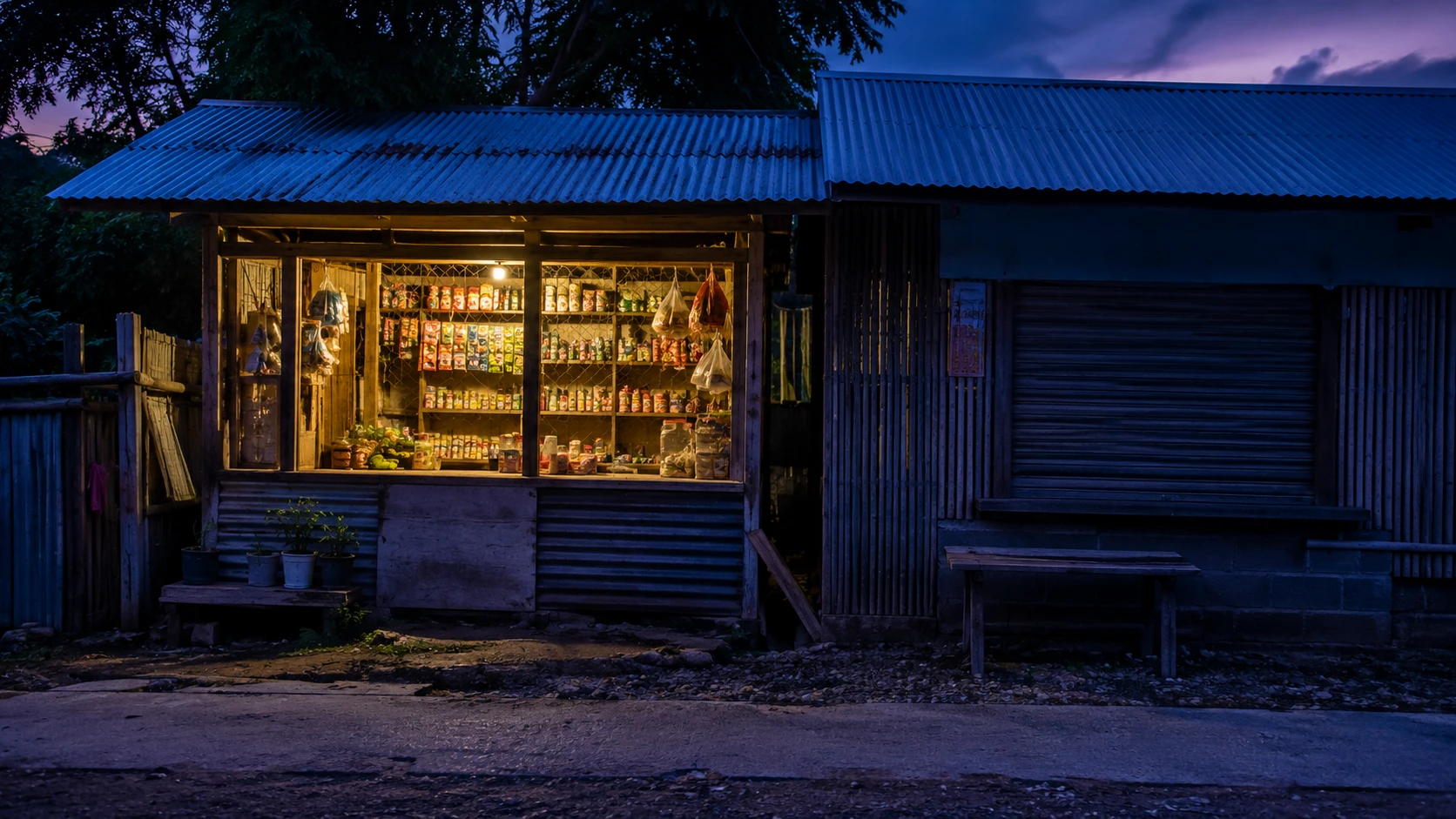
Count the small stores in your community. Now count the dark windows.
Kadaghanan kanila mga itom.
Nothing here is broken. That is the difficult part. The stores open on time. The stock is fair. The owners work. Every sale across every counter is honest.
And the community still gets poorer every year.
Everyone copies the same thing
Look at what got copied.
A small store needs no land, no season, no skill, no waiting. Rent a window. Buy stock. Sell today. It is the easiest thing in the community to copy.
So it got copied. Twenty times.
That is the whole reason it does not work. A business anyone can copy in a week has nothing protecting it — not from you, and not from the next person to copy it after you. Every copy splits the same money. Nobody added any.
Nobody copies the thing that brings money in. They copy the thing that is easy to start — then wonder why the window went dark.
The money inside a community is a stock, not a source. Moving it around faster does not make more of it. It only makes the stock fall in smaller steps.
Money comes in one way: someone outside pays for something made here.
The land can do that. The store cannot. The store buys from a supplier outside and sells to a neighbour inside. Every restock is money leaving. What comes back is the margin — a fraction of what went out.
Count the hands
Follow one kilo from the land to a table.
Your gate. The travelling buyer. The market trader. The small store. The plate.
Four hands. Each one prices the same way — take the cost, double it, hope it covers the bad week.
Count your own chain. Double for each hand. Compare it to the shelf.
Your neighbour paid eight for what you sold for one. You live on the same street. The seven in between did not stay here.
And doubling does not work for the people doing it either. Price high, fewer customers come. Fewer customers, the same rent and the same stock still have to be covered. So the price goes up again. Each step feels careful. Together they close a door.
Low volume never carried anyone. It only makes the next price rise feel necessary.
Why you double
Not greed. You double because you cannot see what the money is already promised to.
The money is not one pile. It is four. Only one of them is yours.

Most people keep all four in the same tin. So all four get spent. Then stock day arrives and there is nothing, so it gets borrowed. Then the debt pile grows. Then the price has to rise to cover it.
This is not a failure of character. It is a tin with nothing separating what is inside it.
Separate the piles and you stop guessing. You will find the fourth pile is real, and that your floor price is lower than double.
Lower price. More customers. More money kept. Not because you worked harder — because you could see.
You double because you cannot see. Once you can see, you do not need to double. And when you stop doubling, you sell more.
So why does nobody work the land?
Not because it is hard work. Because of the deadline.
The harvest dies. The buyer knows the date. You take his price or you take nothing.
That is not a bad buyer. That is a buyer who can wait, standing in front of someone who cannot — and the fruit sets the price, not the farmer.
Every season it repeats. Every season the land feels a little more worthless, and the window feels a little more safe.
What the cooperative changes
Remove the deadline and the land is the only thing here that brings new money in.
That is a cold room with panels on the roof. Not a factory. Not a grant. Not a programme.
The law already says a cooperative can own one. The building is what is missing — and it is nearer than most people think.
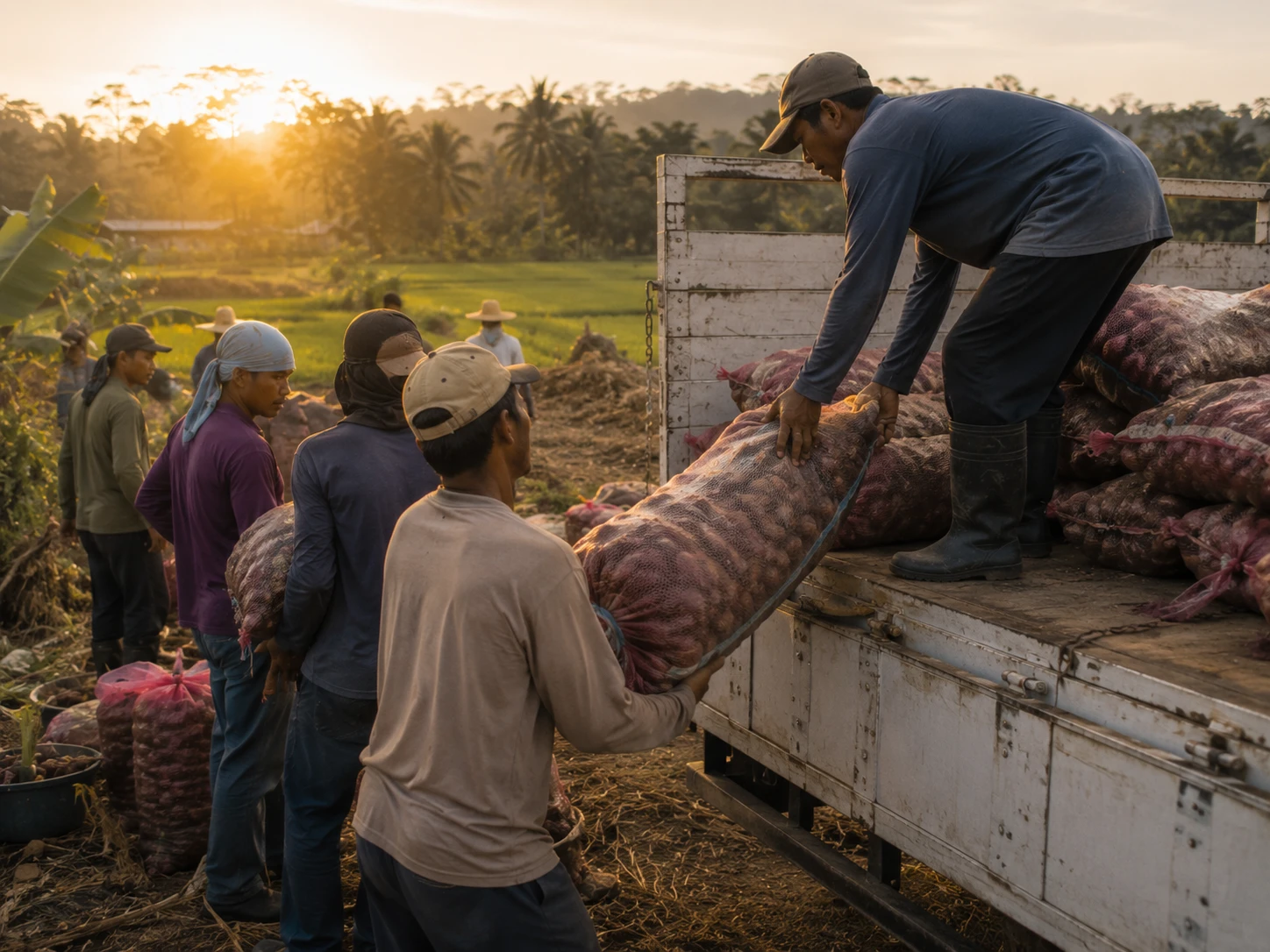
Ten operators together have volume. Volume makes a truck possible. A truck reaches a market that is not this one. A market that is not this one pays a price that was not set at your gate.
It also removes hands. Fewer hands between the land and the plate means fewer doublings, and the ones that remain have something to calculate with.
The margin that used to leave stays. That is the first new money the community has seen in years.
When that happens consistently, families take less credit at the counter. They pay back what they owe. They buy with cash instead of a promise.
Even the store benefits. Not because more money moves, but because for the first time some of it came from outside.
If yes, keep going. If no, find out why before the next season.
That question is the difference between a cooperative that grows and one that quietly fails. It is one observable result, anchored outside the cooperative, recorded where it happens.
Importante ba? — Sukda kini!!
MetriqOne is a performance measurement framework built for organisations operating in fragile, resource-constrained environments. It works on paper, offline, and in over a hundred languages. The signal is the instrument.
MetriqOne · Ebidensya nga walay kasaba · metriq.one