The land is worth more than the store.
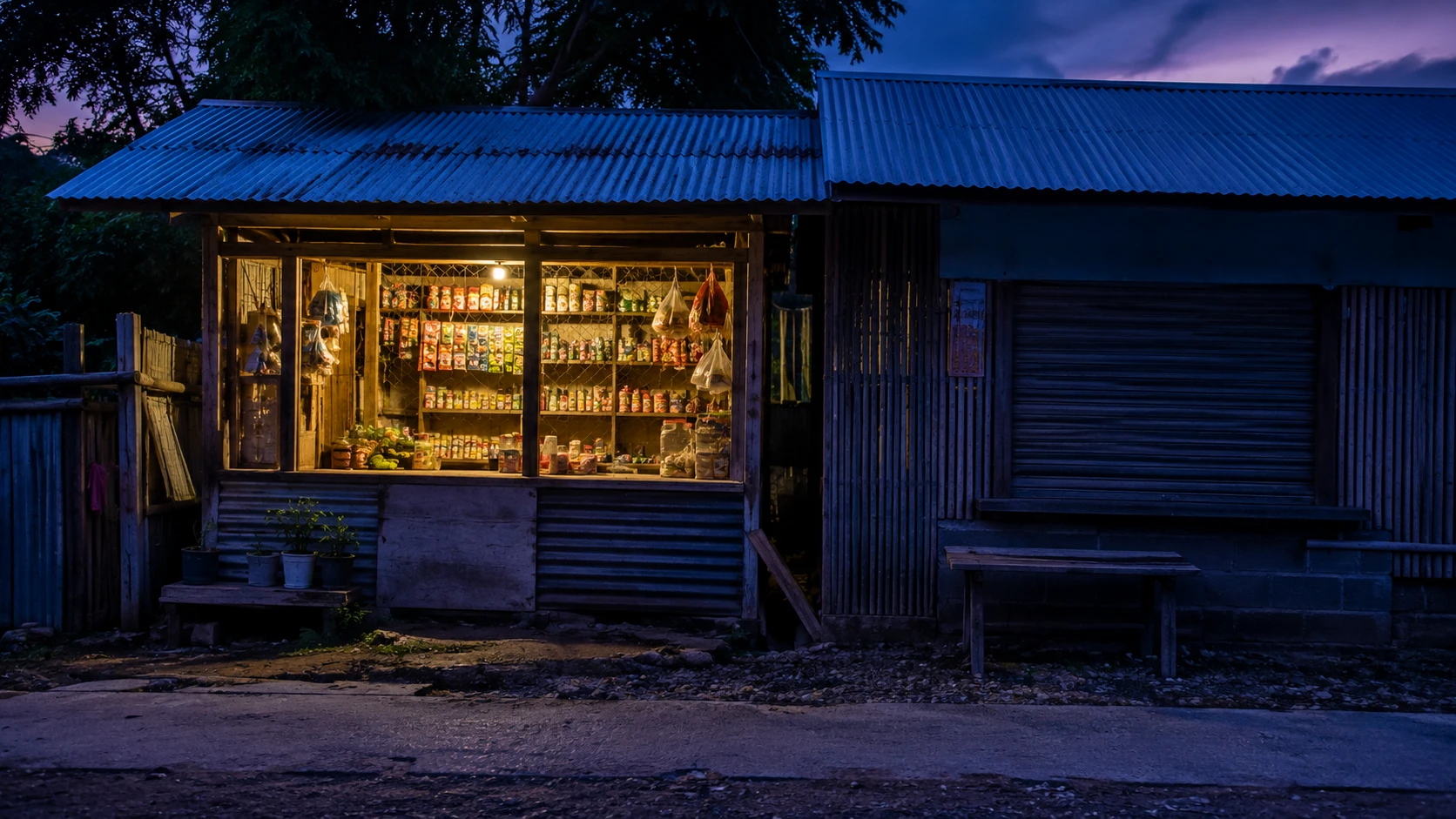
Count the small stores in your community. Now count the dark windows.
Die meisten davon sind dunkel.
Nothing here is broken. That is the difficult part. The stores open on time. The stock is fair. The owners work. Every sale across every counter is honest.
And the community still gets poorer every year.
Everyone copies the same thing
Look at what got copied.
A small store needs no land, no season, no skill, no waiting. Rent a window. Buy stock. Sell today. It is the easiest thing in the community to copy.
So it got copied. Twenty times.
That is the whole reason it does not work. A business anyone can copy in a week has nothing protecting it — not from you, and not from the next person to copy it after you. Every copy splits the same money. Nobody added any.
Nobody copies the thing that brings money in. They copy the thing that is easy to start — then wonder why the window went dark.
The money inside a community is a stock, not a source. Moving it around faster does not make more of it. It only makes the stock fall in smaller steps.
Money comes in one way: someone outside pays for something made here.
The land can do that. The store cannot. The store buys from a supplier outside and sells to a neighbour inside. Every restock is money leaving. What comes back is the margin — a fraction of what went out.
Count the hands
Follow one kilo from the land to a table.
Your gate. The travelling buyer. The market trader. The small store. The plate.
Four hands. Each one prices the same way — take the cost, double it, hope it covers the bad week.
Count your own chain. Double for each hand. Compare it to the shelf.
Your neighbour paid eight for what you sold for one. You live on the same street. The seven in between did not stay here.
And doubling does not work for the people doing it either. Price high, fewer customers come. Fewer customers, the same rent and the same stock still have to be covered. So the price goes up again. Each step feels careful. Together they close a door.
Low volume never carried anyone. It only makes the next price rise feel necessary.
Why you double
Not greed. You double because you cannot see what the money is already promised to.
The money is not one pile. It is four. Only one of them is yours.

Die meisten Leute bewahren alle vier in derselben Dose auf. Also werden auch alle vier ausgegeben. Dann kommt der Tag, an dem Nachschub gebraucht wird, und es ist nichts mehr da, also wird etwas geliehen. Dann wächst der Schuldenberg. Dann muss der Preis steigen, um das auszugleichen.
Das ist kein Charakterfehler. Es ist eine Dose, in der nichts das Innere voneinander trennt.
Trennen Sie die Stapel, und Sie hören auf zu raten. Sie werden feststellen, dass der vierte Stapel real ist und dass Ihr Mindestpreis niedriger als das Doppelte ist.
Niedrigerer Preis. Mehr Kunden. Mehr Geld bleibt übrig. Nicht, weil du härter gearbeitet hast – sondern weil du den Überblick hattest.
Du verdoppelst, weil du nicht sehen kannst. Sobald du sehen kannst, musst du nicht mehr verdoppeln. Und wenn du aufhörst zu verdoppeln, verkaufst du mehr.
Warum arbeitet also niemand das Land?
Nicht, weil es harte Arbeit ist. Wegen der Frist.
Die Ernte vergeht. Der Käufer kennt das Datum. Du nimmst seinen Preis oder du bekommst nichts.
Das ist kein schlechter Käufer. Das ist ein Käufer, der warten kann, und steht vor jemandem, der es nicht kann — und die Frucht bestimmt den Preis, nicht der Landwirt.
Jede Saison wiederholt es sich. Jede Saison fühlt sich das Land ein wenig wertloser an, und das Fenster ein wenig sicherer.
Was die Cooperative verändert
Nimm die Frist weg, und das Land ist das Einzige hier, das neues Geld einbringt.
Das ist ein Kühlraum mit Paneelen auf dem Dach. Keine Fabrik. Kein Zuschuss. Kein Programm.
Das Gesetz besagt bereits, dass eine Cooperative eine besitzen kann. Das Gebäude fehlt — und es ist näher, als die meisten denken.
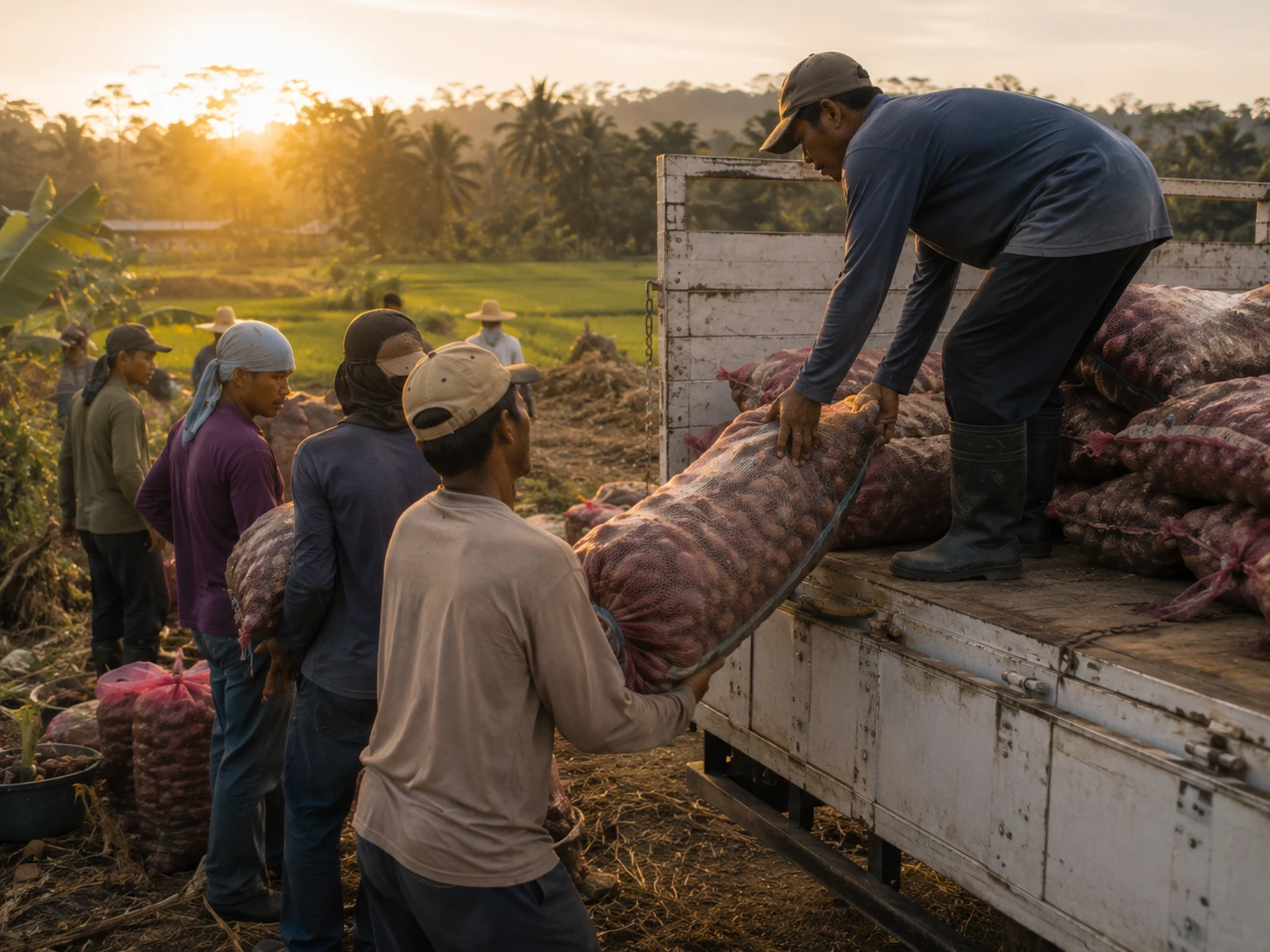
Zehn Betreiber zusammen haben Volumen. Volumen macht einen Lkw möglich. Ein Lkw erreicht einen Markt, der nicht dieser ist. Ein Markt, der nicht dieser ist, zahlt einen Preis, der nicht an deinem Tor festgelegt wurde.
Es entfernt auch Hände. Weniger Hände zwischen dem Feld und dem Teller bedeuten weniger Verdoppelungen, und die verbleibenden haben etwas, womit sie rechnen können.
Die Marge, die früher verloren ging, bleibt. Das ist das erste neue Geld, das die Gemeinschaft seit Jahren gesehen hat.
Wenn das regelmäßig passiert, nehmen Familien weniger Kredit an der Theke auf. Sie zahlen zurück, was sie schulden. Sie kaufen mit Bargeld statt mit einem Versprechen.
Sogar das Geschäft profitiert. Nicht weil mehr Geld im Umlauf ist, sondern weil zum ersten Mal ein Teil davon von außen kommt.
Wenn ja, mach weiter. Wenn nein, finde vor der nächsten Saison heraus, warum.
Diese Frage ist der Unterschied zwischen einer Cooperative, die wächst, und einer, die still und leise scheitert. Es ist ein beobachtbares Ergebnis, das außerhalb der Cooperative verankert und dort aufgezeichnet wird, wo es geschieht.
Spielt das eine Rolle? – Messen Sie es!
MetriqOne ist ein Leistungsbewertungs-Framework, das für Organisationen entwickelt wurde, die in fragilen, ressourcenarmen Umgebungen tätig sind. Es funktioniert auf Papier, offline und in über hundert Sprachen. Das Signal ist das Instrument.
MetriqOne • Evidenz ohne Störfaktoren · metriq.one