Monitoramento do Comércio da AfCFTA — Evidências em uma Única Visão
A Área de Livre Comércio Continental Africana conecta 55 estados-membros, formando a maior área de livre comércio do mundo em número de membros. Mas as pequenas empresas e cooperativas que realmente movimentam mercadorias através dessas fronteiras relatam seu desempenho anualmente, quando o fazem — e cada estado-membro reporta em seu próprio formato, em seu próprio ciclo, sem nenhum padrão compartilhado de evidência por trás.
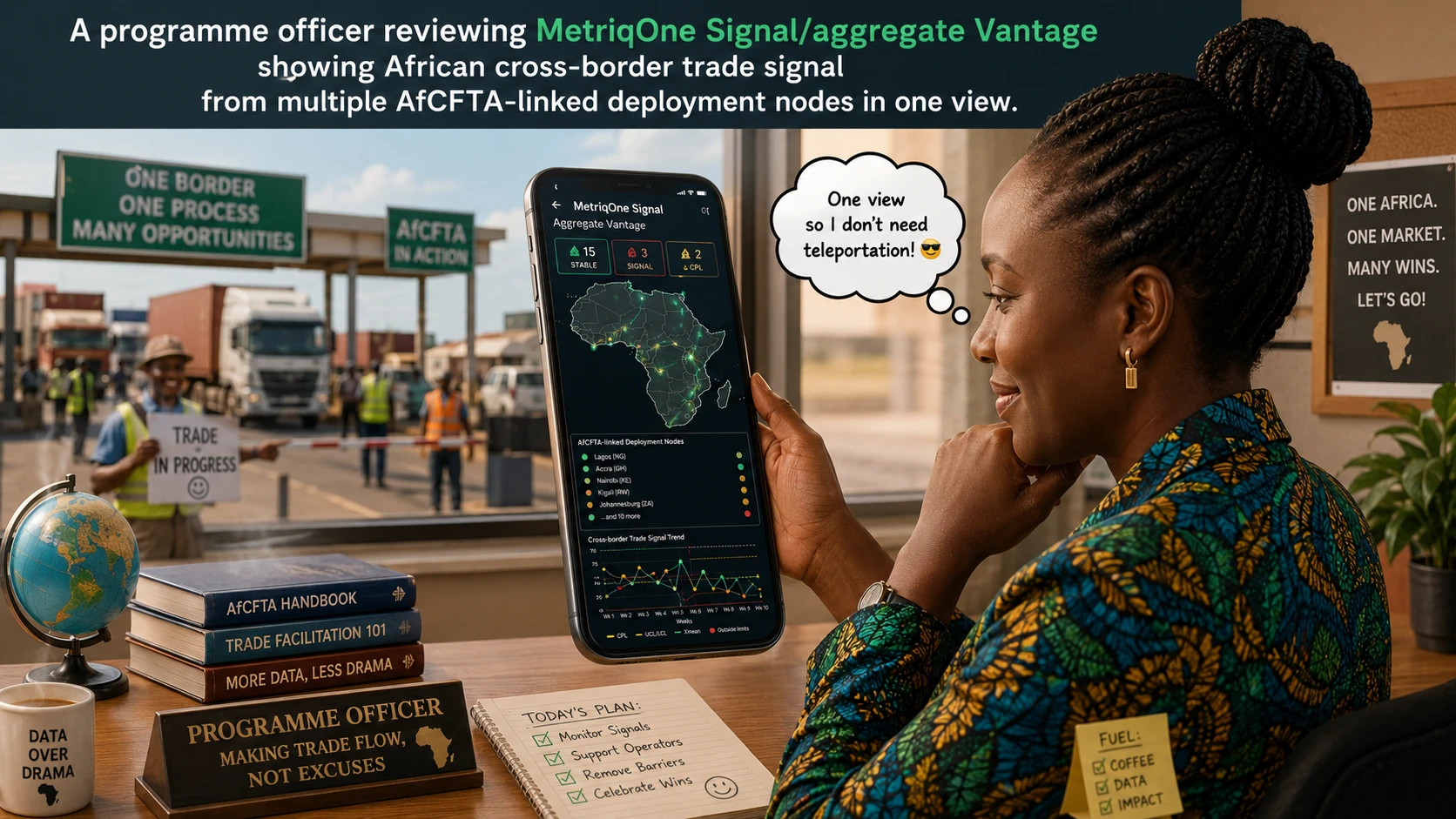
Aggregate Vantage não pede que os estados-membros mudem a forma como reportam. Ele lê a convergência CRI diretamente dos nós de nível Organização e Cooperative — o mesmo padrão de medição em cada nó, independentemente de qual estado-membro ele pertença — e mostra a um responsável de programa uma camada de evidência em todas as implantações simultaneamente.
A discrepância entre a ambição comercial e as evidências comerciais.
Para gestores de programas e gestores de fundos.
Uma decisão de desembolso ou de facilitação comercial que envolva três ou quatro estados-membros atualmente significa conciliar três ou quatro formatos de relatório separados, em três ou quatro ciclos diferentes, cada um auto-relatado pelo próprio nó. Não existe um ponto único onde alguém possa ver se a atividade comercial transfronteiriça está realmente estável, crescendo ou fracassando silenciosamente — apenas uma pilha de declarações anuais que chegam tarde demais para serem utilizadas.
Para micro, pequenas e médias empresas (MPMEs) e cooperativas que realizam comércio internacional.
As empresas que realmente realizam comércio vinculado ao AfCFTA são solicitadas a apresentar provas de atividade consistente e verificável para financiamento, alfândega ou negociações com compradores em grande volume — e a maioria não tem nada além de um caderno e um extrato bancário para mostrar. As evidências que um credor ou parceiro comercial deseja e as evidências que a Enterprise realmente pode apresentar não são a mesma coisa.
Ambos os lados estão perdendo a mesma camada: um padrão de evidência em nível de Field que é idêntico independentemente de qual estado-membro o nó esteja, lido em um só lugar em vez de conciliado posteriormente.
Como Aggregate Vantage interpreta o sinal
Aggregate Vantage não faz a média dos dados entre países nem produz um único número combinado. Ele lê a própria convergência de CRI de cada nó e mostra cada nó, nomeado, em uma única camada de evidência.
Onde as evidências comerciais são registradas
Nós capturamos a atividade em nível de Field nos nós de Organização e Cooperative — formulário em papel e envio por QR, com capacidade offline — seguindo o mesmo padrão, seja o nó um comerciante individual ou uma Cooperative, independentemente do estado-membro em que opera.
Onde Aggregate Vantage lê entre nós
A convergência do CRI — confirmação de pelo menos 2 dos 3 módulos de sinal — é lida de todos os nós vinculados ao AfCFTA simultaneamente. O status de cada nó permanece visível individualmente; nada é mesclado em um único número continental que oculte qual nó está realmente impulsionando um resultado.
Onde o gestor do programa atua
Um responsável de programa que monitora a atividade comercial em vários nós vê qual nó específico está fora de sua faixa confirmada — um nome, não uma cor em um gráfico misto — antes mesmo que um relatório anual o trouxesse à tona.
Cinco sub-regiões, um padrão de corredor comercial
A atividade comercial vinculada à AfCFTA apresenta características diferentes em cada sub-região — mercadorias distintas, infraestrutura de corredores diferente, padrões de comércio dominantes variados. O padrão de evidência subjacente permanece idêntico em todos os lugares; apenas o formato do que é capturado muda.
Norte da ÁfricaAMU
Rotas comerciais estabelecidas de manufatura e processamento nos corredores da África Subsaariana. A necessidade de verificação aqui é a consistência ao longo de uma cadeia de suprimentos mais longa e industrializada — convergência de CRI em cada ponto de transferência, em vez de uma única leitura em nível de Enterprise.
África OcidentalECOWAS
A maior concentração de atividade comercial de MPMEs e Cooperative vinculadas ao AfCFTA no continente, grande parte dela adjacente à economia informal. O registro no nível Cooperative — um TIN, uma cadeia coletiva de evidências — se encaixa diretamente nesse formato.
África CentralECCAS
Os corredores comerciais aqui são os menos contínuos de qualquer sub-região — os nós ficam inativos e retomam conforme o Access e as condições mudam. A desativação nunca apaga, então um nó que pausa não perde seu histórico de evidências quando a atividade comercial é retomada.
África OrientalEAC · IGAD
Dois órgãos regionais sobrepostos e algumas das operações de Field mobile-first mais maduras do continente, o que faz desta sub-região a mais adequada para submissão de QR via smartphone, com alternativa compatível com papel onde a conectividade é inconsistente.
África AustralSADC
A espinha dorsal de pagamentos digitais transfronteiriços mais desenvolvida das cinco sub-regiões — o campo de testes natural para leitura da convergência total de CRI em vários nós em tempo quase real, com a menor necessidade de compensação de infraestrutura em qualquer outro lugar.
Por que uma visão prevalece onde a reconciliação não prevalece
Cada nó lê de acordo com o mesmo padrão de evidência, independentemente do estado membro em que se encontra — nada a reconciliar posteriormente.
Os nós são exibidos individualmente e com seus nomes, nunca combinados em uma média continental que oculte qual nó está realmente gerando um resultado.
A convergência CRI — 2 de 3 módulos confirmando — é o mesmo padrão de qualidade de desembolso em todos os nós da visualização.
Priorizando o modo offline e compatível com papel no momento da captura — sem pressuposições de conectividade embutidas na cadeia de evidências.
Um corredor comercial. Uma camada de evidências.
Se o seu programa, fundo ou mandato de facilitação do comércio abrange mais de um Estado-membro da AfCFTA, a questão não é se o comércio transfronteiriço está acontecendo. É se você consegue enxergá-lo — confirmado, nó por nó, antes que o relatório anual chegue.