Agenda 2063 — Verifikasi Tanpa Keterlambatan Pelaporan
Cetak biru 50 tahun Afrika berjalan pada siklus pelaporan dua tahunan yang mengagregasi ke atas melalui delapan Komunitas Ekonomi Regional ke dalam satu Kerangka Hasil Kontinental. Cetak biru tersebut baik. Sinyal yang mengisinya tidak — sebagian besar yang mencapai tingkat kontinental adalah laporan mandiri, tertinggal, dan tidak dapat diverifikasi pada saat klaim.
MetriqOne tidak mengusulkan kerangka kerja baru untuk berdampingan dengan Agenda 2063. MetriqOne mengusulkan cara untuk memverifikasi kerangka kerja yang sudah ada — bukti yang dikumpulkan di tempat pekerjaan sebenarnya terjadi, kompatibel dengan kertas, dan secara struktural tidak mungkin untuk pengawasan.
Kesenjangan Antara Rencana dan Bukti
Untuk lembaga-lembaga kontinental
Kerangka Hasil Kontinental bergantung pada Negara Anggota dan Komunitas Ekonomi Regional (REC) yang mengirimkan data kemajuan dalam siklus yang tetap. Setiap lapisan dalam rantai tersebut saat ini bergantung pada laporan mandiri. Pada saat suatu angka mencapai laporan kontinental, tidak ada pihak di hulu yang dapat memastikan dengan yakin berdasarkan bukti apa angka tersebut dibangun — hanya bahwa angka tersebut tiba tepat waktu.
Untuk para pelaksana program
LSM, koperasi, dan mitra pelaksana di lapangan diminta untuk membuktikan penyerahan terhadap indikator yang ditetapkan dua atau tiga lapis di atas mereka — biasanya dengan asumsi konektivitas yang tidak berlaku di tempat program sebenarnya berjalan. Hasilnya adalah beban pelaporan yang bersaing langsung dengan waktu penyerahan, dan donor yang menerima narasi di mana mereka membutuhkan bukti.
Kedua masalah adalah masalah yang sama: rantai bukti terputus pada titik yang paling jauh dari kekuasaan dan paling dekat dengan pekerjaan. MetriqOne dibangun untuk bertahan tepat pada titik itu.
Bagaimana Peta Arsitektur
Tumpukan MetriqOne — Designation Bridge, CSI, Modul, PI, CRI — tidak memerlukan desain ulang kontinental untuk menempel pada pelaporan Agenda 2063. Ia berada di bawahnya, sebagai lapisan bukti yang saat ini tidak dimiliki oleh kerangka kerja yang ada.
Tempat lahirnya bukti
Indikator Program (PI) ditangkap pada tingkat agen — Cooperative, kantor Field, titik penyaluran tunggal — dapat diamati dan sesuai dengan kertas, tanpa asumsi konektivitas.
Di mana bukti dikumpulkan
Modul dan Indikator Hasil Kritis (CRI) menggulirkan bukti ke atas tanpa membuang rantai — badan regional melihat hasil yang terverifikasi, bukan klaim yang diketik ulang.
Di mana bukti bertemu dengan tata kelola
Designation Bridge menjaga setiap CRI tetap dapat ditelusuri kembali ke aspirasi yang seharusnya dilayaninya — sehingga laporan kontinental dapat menunjukkan cara kerjanya, bukan hanya kesimpulannya.
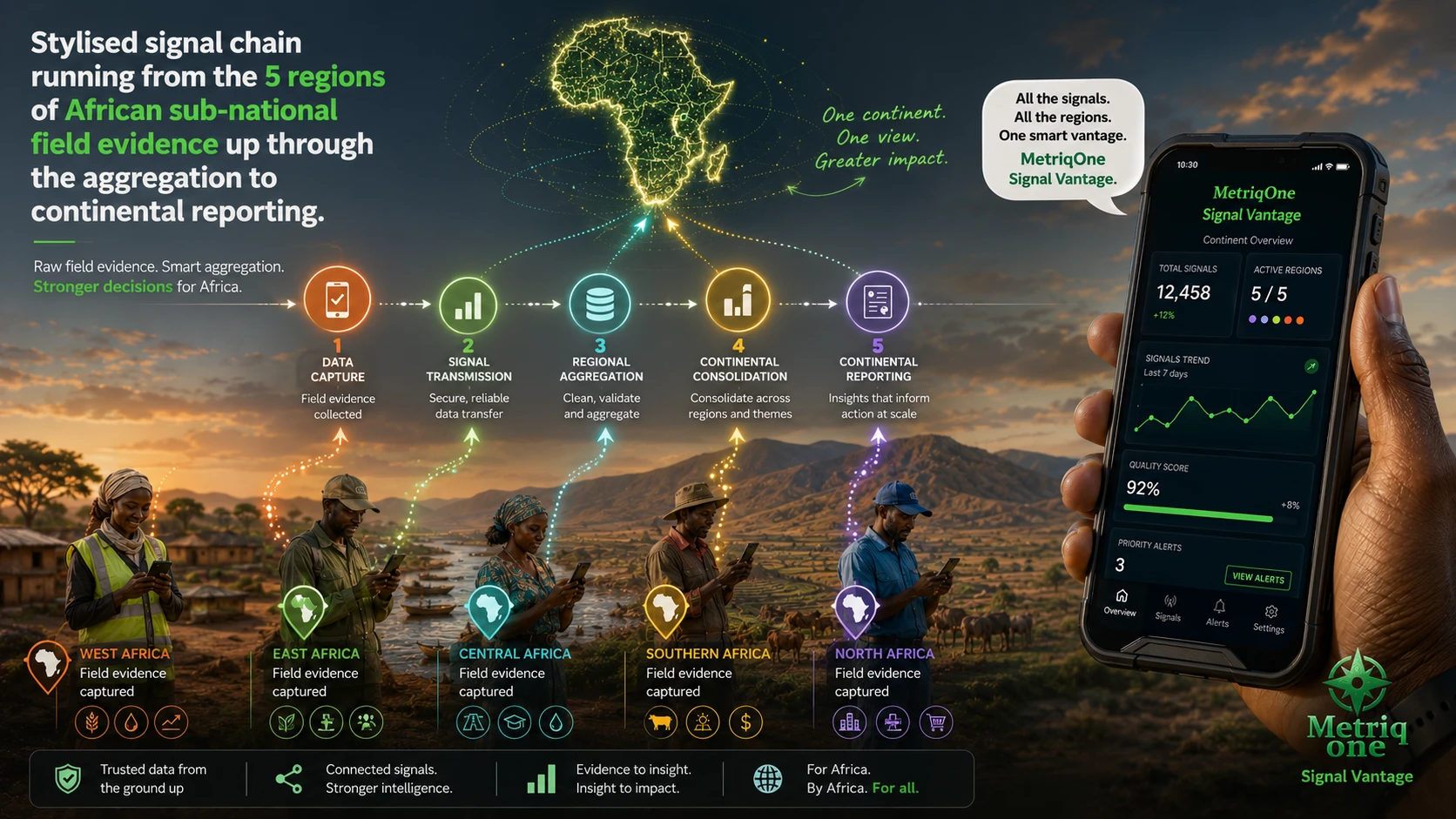
Lima Sub-Wilayah, Satu Masalah Verifikasi, Lima Bentuk Berbeda
Pencapaian Agenda 2063 berjalan melalui Komunitas Ekonomi Regional, tetapi masalah verifikasi terlihat berbeda di setiap sub-wilayah. Arsitektur di bawahnya tetap sama — yang berubah adalah bagian mana yang memikul beban.
Afrika UtaraAMU
Kapasitas kelembagaan relatif kuat, tetapi data program lintas batas masih sampai di tingkat regional dalam bentuk yang dibentuk oleh konvensi pelaporan masing-masing Negara Anggota. Kesenjangan verifikasi di sini bukanlah infrastruktur — melainkan komparabilitas. Sebuah CRI yang didefinisikan sekali di tingkat Modul dan dibawa tanpa perubahan melalui tumpukan menutup kesenjangan itu tanpa meminta lembaga mana pun untuk mengubah proses internalnya sendiri.
Afrika BaratECOWAS
Kepadatan tertinggi penyaluran program untuk koperasi, UMKM, dan ekonomi informal di benua ini — serta kesenjangan terlebar antara lokasi program dijalankan dan jangkauan infrastruktur pembayaran digital. Model Node Business ada justru untuk bentuk seperti ini: operator fisik yang menangani pendaftaran dan penangkapan bukti untuk titik penyaluran yang tidak memiliki jalur digital sendiri, tanpa perlu mengawasi mereka untuk melakukannya.
Afrika TengahECCAS
Infrastruktur pelaporan di subkawasan ini paling tipis dibanding subkawasan lain, dan keberadaan program sering kali terputus-putus — agen bergerak masuk dan keluar dari jangkauan sejauh izin Access dan pendanaan memungkinkan. Register Agen menangani ini secara bawaan: penonaktifan tidak pernah menghapus, sehingga program yang berhenti selama enam bulan tidak kehilangan rantai buktinya saat dilanjutkan kembali.
Afrika TimurEAC · IGAD
Dua badan regional yang saling tumpang tindih, guncangan iklim dan keamanan yang sering, serta beberapa operasi Field berbasis-ponsel paling matang di benua ini. Inilah subkawasan tempat peringatan dini paling penting — ambang CPL ditetapkan di bawah titik picu XmR, sehingga koordinator melihat kondisi stabil-tapi-di-bawah-ambang berminggu-minggu sebelum pelanggaran yang terkonfirmasi secara statistik, bukan setelah guncangan telah mengganggu penyaluran.
Afrika SelatanSADC
Tulang punggung pembayaran digital dan konektivitas paling maju dari kelima subkawasan, sehingga secara alami menjadi tempat uji coba untuk arsitektur dua lapis penuh — bukti tingkat-agen yang memberi masukan ke tulang punggung manajemen yang selanjutnya memberi masukan ke putaran tata kelola regional, dengan kompensasi infrastruktur paling sedikit yang diperlukan di tempat lain.
Mengapa Hal Ini Berlaku di Mana Pelaporan Mandiri Tidak Berlaku
Mengutamakan offline dan kompatibel dengan kertas — tidak ada asumsi konektivitas yang tertanam dalam rantai bukti.
Tidak ada visibilitas data di luar apa yang ditugaskan untuk dilihat oleh setiap lapisan — kemampuan pengawasan nol bersifat struktural, bukan kebijakan.
Penonaktifan tidak pernah menghapus — rantai bukti tetap ada meskipun terjadi gangguan, kekurangan dana, dan pergantian staf.
Setiap Critical Result Indicator tetap dapat ditelusuri kembali melalui Designation Bridge ke aspirasi yang dilayaninya.
Apakah itu penting? — Ukurlah!!
Jika program Anda melapor ke Agenda 2063 — secara langsung atau melalui REC, Negara Anggota, atau donor yang melapor ke sana — pertanyaannya bukan apakah cetak birunya sudah tepat. Pertanyaannya adalah apakah ada yang bisa memverifikasi, pada titik klaim, bahwa bukti di baliknya nyata.