Adyenda 2063 — Pag-verify Nang Walang Pagkaantala sa Pag-uulat
Ang 50-taong asul na plano ng Africa ay tumatakbo sa isang dalawang taong siklo ng pag-uulat na nagsasama-sama sa pamamagitan ng walong Mga Komunidad ng Ekonomiyang Rehiyonal patungo sa isang Balangkas ng mga Resulta sa Kontinente. Ang asul na plano ay matatag. Ang senyas na nagpapakain dito ay hindi — karamihan sa umaabot sa antas ng kontinente ay sariling naiuulat, nahuhuli, at hindi mapatutunayan sa punto ng pag-angkin.
Ang MetriqOne ay hindi nagmumungkahi ng bagong balangkas na sasabayan ng Agenda 2063. Iminumungkahi nito ang paraan upang patunayan ang umiiral na — ebidensiyang nakukuha kung saan talaga nangyayari ang trabaho, tugma sa papel, at estruktural na walang kakayahang pangsubaybay.
Ang Agwat sa Pagitan ng Blueprint at Ebidensya
Para sa mga institusyong kontinental
Ang Continental Results Framework ay nakadepende sa mga Member States at RECs na magsumite ng datos ng progreso sa isang nakapirming siklo. Ang bawat antas ng kadena na iyon ay kasalukuyang umaasa sa sariling pag-ulat. Sa oras na maabot ng isang numero ang isang continental report, walang sinuman sa itaas ng daloy ang makapagsasabi nang may katiyakan kung anong ebidensya ang pinagbatayan nito — tanging dumating ito sa tamang oras.
Para sa mga tagapaghatid ng programa
Ang mga NGO, kooperatiba, at kasosyong nagpapatupad sa lupa ay hinihiling na patunayan ang paghahatid laban sa mga indicator na itinakda dalawa o tatlong antas sa itaas nila — karaniwan ay may assumption ng koneksyon na hindi totoo kung saan talaga tumatakbo ang programa. Ang resulta ay isang burden sa pag-uulat na direktang nakikipagkompetensya sa oras ng paghahatid, at mga donor na tumatanggap ng salaysay kung saan kailangan nila ng ebidensya.
Ang dalawang problema ay iisang problema: ang kadena ng ebidensya ay napuputol sa puntong pinakamalayo sa kapangyarihan at pinakamalapit sa trabaho. MetriqOne ay binuo upang manatili nang eksakto sa puntong iyon.
Paano Mapa ng Arkitektura
MetriqOne's nakasalansan — Designation Bridge, CSI, Module, PI, CRI — ay hindi nangangailangan ng isang kontinental na muling pagdisenyo upang ikabit sa pag-uulat ng Agenda 2063. Ito ay nasa ilalim nito, bilang patunay na layer na kasalukuyang kulang sa umiiral na balangkas.
Kung saan ipinanganak ang ebidensya
Ang mga Programme Indicators (PI) ay nakukuha sa antas ng ahente — ang Cooperative, ang Field office, ang iisang delivery point — nakikita at tugma sa papel, nang walang palagay sa koneksyon.
Kung saan pinagsama-sama ang ebidensya
Ang mga Modulo at Critical Result Indicators (CRIs) ay nagpapasá ng ebidensiya pataas nang hindi itinatapon ang tanikala — isang panrehiyong katawan ang nakakakita ng napatunayang resulta, hindi isang muling na-type na pag-aangkin.
Kung saan nagtatagpo ang ebidensya at pamamahala
Ang Designation Bridge ay nagpapanatili na ang bawat CRI ay matutunton pabalik sa hangarin na dapat nitong pagsilbihan — kaya ang isang ulat kontinental ay maaaring ipakita ang proseso nito, hindi lang ang konklusyon nito.
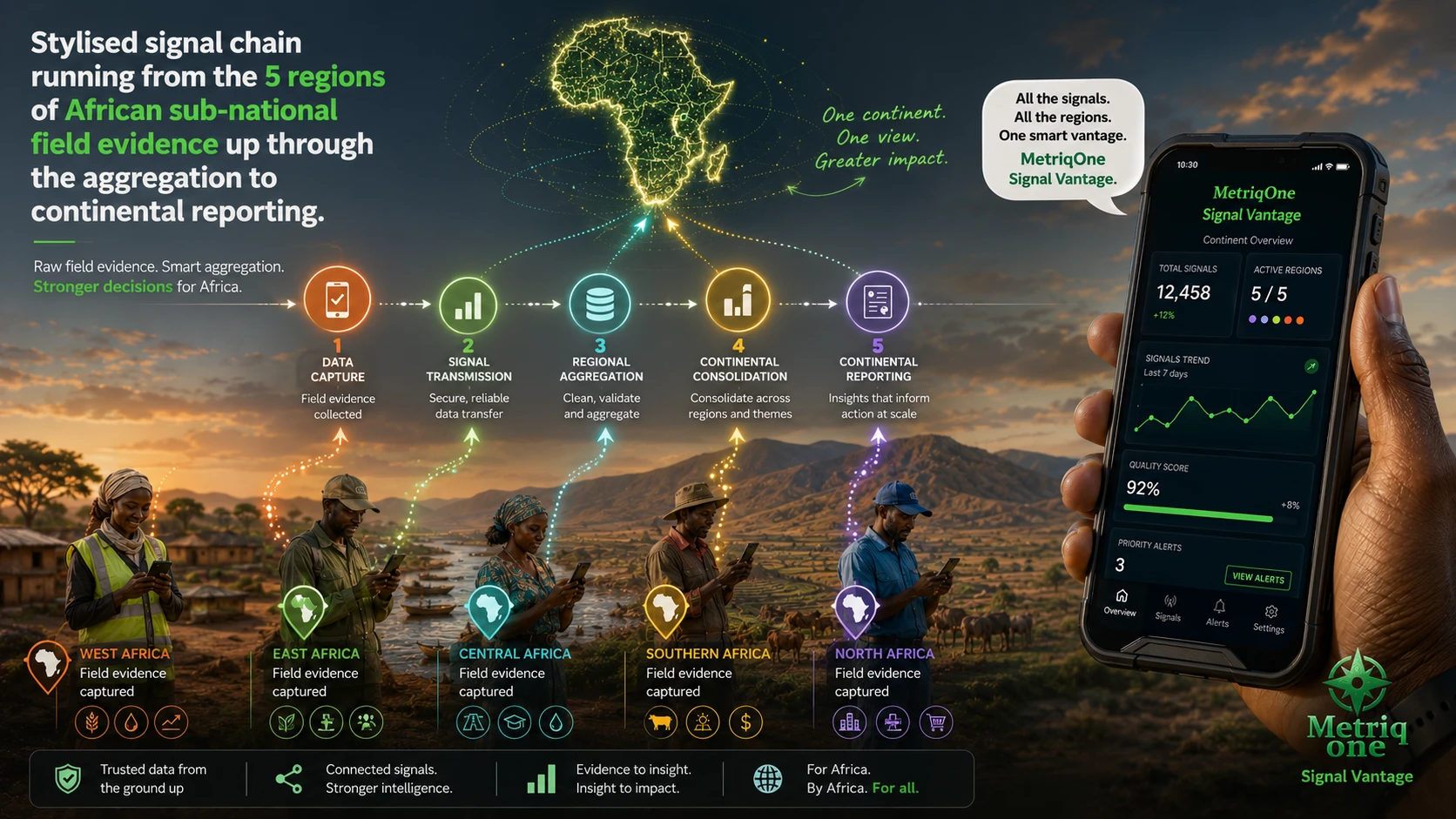
Limang Sub-Rehiyon, Isang Problema sa Pag-verify, Limang Iba't Ibang Hugis
Ang paghahatid ng Agenda 2063 ay dumaraan sa mga Regional Economic Communities, ngunit ang problema sa beripikasyon ay iba-iba sa bawat sub-rehiyon. Ang arkitektura sa ilalim ay nananatiling pareho — ang nagbabago ay kung aling mga bahagi ang nagdadala ng bigat.
Hilagang AprikaAMU
Ang kakayahang institusyonal ay medyo matatag, ngunit ang data ng programang tumatawid sa hangganan ay dumarating pa rin sa antas ng rehiyon na hinubog ng sariling reporting convention ng bawat Kasaping Estado. Ang agwat sa beripikasyon dito ay hindi imprastraktura — ito ay paghahambing. Isang CRI na tinukoy minsan sa antas ng Module at dinala nang hindi nababago sa buong stack ay nagsasara ng agwat na iyon nang hindi hinihiling sa anumang institusyon na baguhin ang sarili nitong panloob na proseso.
Kanlurang AprikaECOWAS
Ang pinakamataas na densidad ng paghahatid ng programa para sa mga kooperatiba, MSMEs, at impormal na ekonomiya sa kontinente — at ang pinakamalawak na agwat sa pagitan ng kung saan tumatakbo ang mga programa at kung saan umaabot ang imprastraktura ng digital na pagbabayad. Ang Node Business model ay umiiral para sa mismong hugis na ito: isang pisikal na operator na humahawak ng onboarding at pagkuha ng ebidensya para sa mga punto ng paghahatid na walang sariling digital na riles, nang hindi sila sinusubaybayan upang makuha ito.
Gitnang AprikaECCAS
Ang imprastraktura ng pag-uulat ay ang pinakamanipis dito kumpara sa anumang sub-rehiyon, at ang presensya ng programa ay madalas na hindi tuloy-tuloy — ang mga ahente ay pumapasok at lumalabas sa saklaw ayon sa pinapayagan ng Access at pondo. Ang Agent Register ay natural na humahawak nito: ang deactivation ay hindi kailanman nagde-delete, kaya ang isang programa na huminto sa loob ng anim na buwan ay hindi nawawala ang kadena ng ebidensya kapag ito ay nagpatuloy.
Silangang AprikaEAC · IGAD
Dalawang magkakapatong na rehiyonal na katawan, madalas na pagkabigla sa klima at seguridad, at ilan sa mga pinaka-mature na mobile-first na Field operations sa kontinente. Ito ang sub-rehiyon kung saan pinakamahalaga ang maagang babala — ang mga threshold ng CPL ay nakatakda sa ibaba kung saan nag-aapoy ang XmR, kaya nakikita ng isang coordinator ang isang matatag-ngunit-nasa-ilalim-ng-sahig na kondisyon ilang linggo bago ang isang estadistikang kumpirmadong labag, hindi pagkatapos na ang isang pagkabigla ay nakapagambala na sa paghahatid.
Timog AprikaSADC
Ang pinaka-maunlad na backbone ng digital payment at connectivity sa limang sub-rehiyon, na ginagawa itong natural na lugar ng pagsubok para sa buong arkitekturang may dalawang layer — ebidensya sa antas ng ahente na nagpapakain sa gulugod ng pamamahala na nagpapakain naman sa ikot ng pamamahala ng rehiyon, na may pinakamaliit na kinakailangang kompensasyon sa imprastraktura kumpara sa ibang lugar.
Bakit Ito Nalalapat Kung Hindi Nalalapat ang Pag-uulat sa Sarili
Offline-first at tugma sa papel — walang palagay ng koneksyon na nakalagay sa kadena ng ebidensya.
Walang kakayahang makita ang datos na lampas sa itinakdang makita ng bawat layer — ang kawalan ng kakayahan sa pagsubaybay ay estruktural, hindi patakaran.
Hindi kailanman nabubura ang pag-deactivate — nakayanan ng kadena ng ebidensya ang mga pagkaantala, kakulangan sa pondo, at pagpapalit ng tauhan.
Ang bawat Critical Result Indicator ay nananatiling masusubaybayan pabalik sa pamamagitan ng Designation Bridge patungo sa mithiing pinaglilingkuran nito.
Mahalaga ba ito? — Sukatin ito!!
Kung ang iyong programa ay nag-uulat sa Agenda 2063 — direkta man o sa pamamagitan ng isang REC, isang Kasaping Estado, o isang donor na gumagawa nito — ang tanong ay hindi kung ang balangkas ay wasto. Ito ay kung may sinumang makapagpapatunay, sa punto ng pag-aangkin, na ang ebidensya sa likod nito ay totoo.