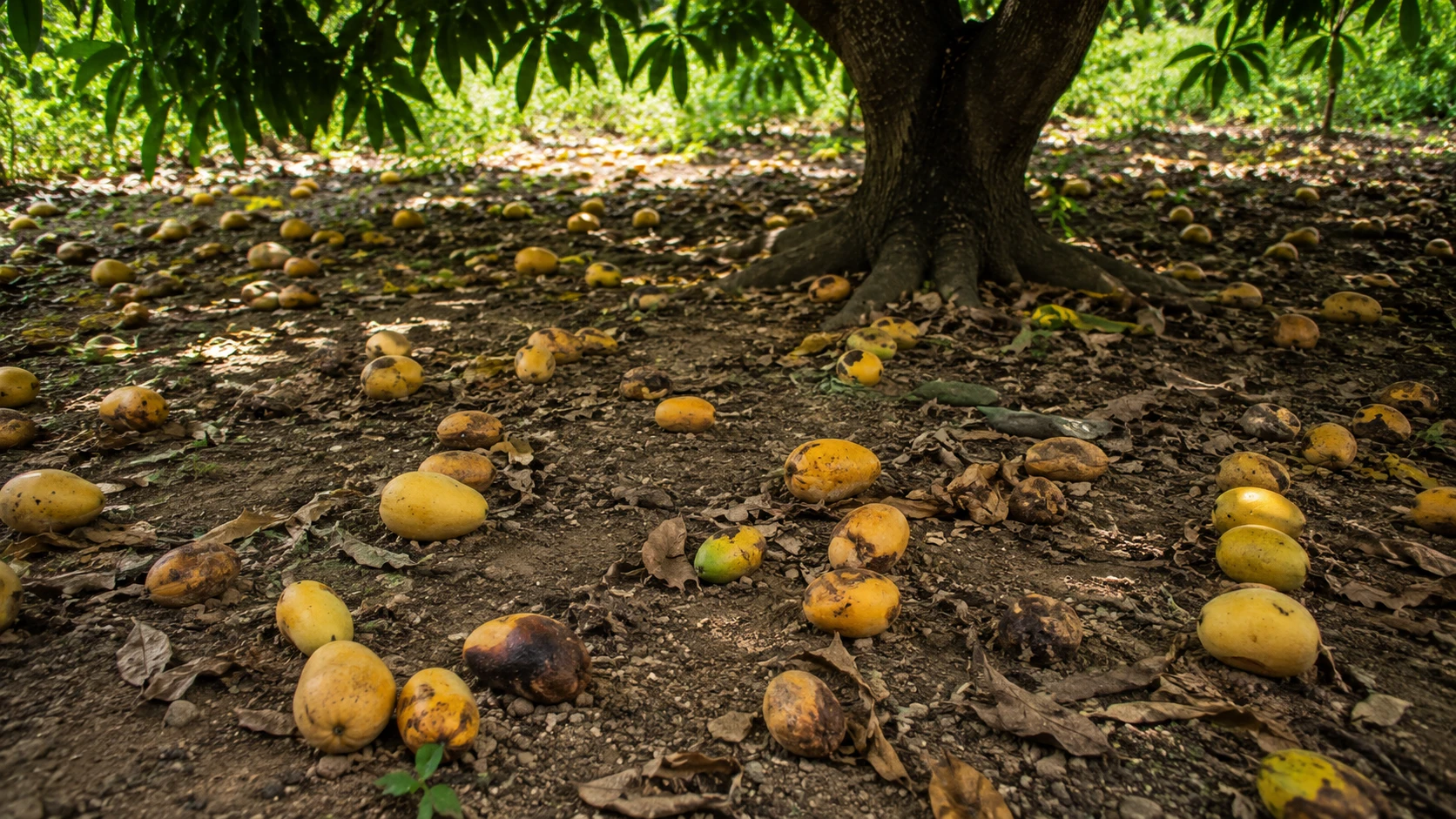
The mango on the ground.
Nobody plants a mango tree hoping it will rot.
But across the region, millions of kilos of fruit never reach a buyer at a fair price. Not because the fruit is bad. Because the clock runs faster than the road to market.
The farmer who planted it watches the fruit ripen and the calendar at the same time — two countdowns running in opposite directions. The fruit is ready. The buyer is not here. The fruit is turning. The buyer arrives. He offers a low price. The farmer takes it.
This is not a storage problem. It is a power problem.
When a farmer cannot hold his fruit, he cannot negotiate. The buyer knows exactly how many days the fruit has left, and prices accordingly. The urgency belongs entirely to the farmer. The patience belongs entirely to the buyer.
This is not a natural condition. It is a structural one, and it repeats every harvest, in every farming community where cold storage does not exist.
The fruit that rots is not waste. It is a transfer. The margin between the desperate price and the fair price moved quietly to the person who could afford to wait.
What the ground is telling you
Vegetables pile up beside the road when the trucks do not come. Fallen fruit draws flies before it draws buyers. Post-harvest losses run high across the region — not from bad farming, but from the gap between harvest and market.
The cooperative cold storage
One farmer cannot afford a cold storage unit. Twenty farmers can.
When twenty families pool their contribution the cost is divided, the asset is shared, and the clock stops working against them. Fruit that lasts three days without cooling lasts three weeks with it. Three weeks is enough time to find the right buyer, in the right market, at the right price.
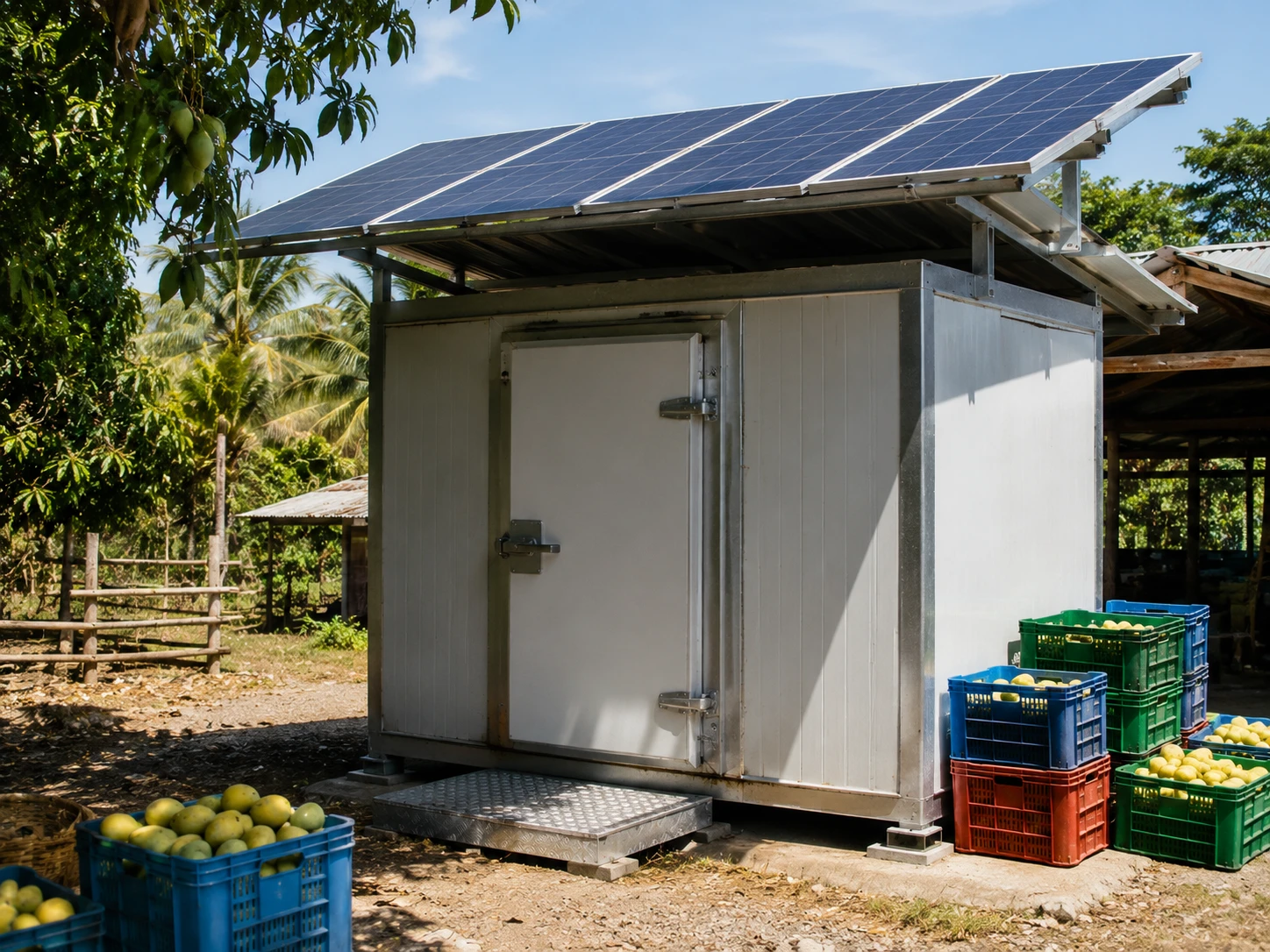
The buyer who arrived with the low offer is still welcome. But now the farmer can say no. Because the fruit is not dying.
That one change — the ability to say no — is worth more than any subsidy, any programme, any workshop with a certificate at the end.
And fruit is only the beginning
The same cold room that protects the mango protects the vegetables, the leafy greens, the catch from the morning boat. A cooperative that solves cold storage for fruit solves it for everything perishable the community produces.
One asset. Many members. Everything that used to rot, protected.
This is not a technology story. It is a cooperation story. Solar panels exist. Insulated units exist. The knowledge exists. What has been missing is the structure that lets twenty families own something together — and the measurement that tells them whether it is working.
If yes, the fruit stays on the tree where it belongs, and the margin stays in the community where it belongs.
If no, find out why before the next harvest arrives and the fruit hits the ground again.
That question, recorded where it happens, is the difference between a cooperative that changes a farming community and one that rusts quietly behind the community hall.
The mango on the ground is a choice. Not the farmer's choice. The structure's choice.
A cooperative with cold storage and a measurement system is a different choice. One that twenty farming families can make without waiting for a politician, a programme, or permission.
Girîng e? — Bipîve!!
MetriqOne is a performance measurement framework built for organisations operating in fragile, resource-constrained environments. It works on paper, offline, and in over a hundred languages. The signal is the instrument.
MetriqOne · Delîl bê deng · metriq.one