Ji bo Karsaziyên Biçûk
Karsaziya we xwedî şêwazek e. Piraniya Xwediyan Qet Nabînin.
A good week and a bad week feel the same in the moment — you just keep working. Without a record, you can't tell the difference between normal ups and downs and something actually going wrong, until it's already a problem. MetriqOne's whole purpose is showing you that difference early enough to do something about it.
That is the main thing it does: read your own numbers back to you in a way that catches drift while it's still small, so you can find the real cause and fix it — before a bad month becomes a bad year. A printed, dated record of how your business performs comes along with that, almost as a side effect — and it happens to be exactly what a bank or a buyer wants to see. Here is what actually happens, week by week.

Sê Karsazî. Xala Destpêkê ya Heman.
Karê cuda, heman valahî: rêyek tune ku guherîna normal ji nîşanek hişyariyê ya rastîn were veqetandin, û tiştek nehatiye nivîsandin ku bankek an kirrûbir jî pê bawer bike. Em ê her sêyan bişopînin ka çi bi rastî diqewime.

Bazirgan
Li bazar an jî li ser sînor kelûpelan dikire û difiroşe. Her hefte bazirganiyê dike. Li ser kaxezê tiştek wisa nabêje.

Cotkar
Berhem li gorî çerxek sabît diçîne û difiroşe. Berhem diguhere. Ti tomar tune ku "normal" çawa xuya dike.

Atolyeya
Li gorî siparîşê tiştan çêdike an tamîr dike. Bi awayekî pêbawer radest dike. Heta niha qet ne hewce bû ku ji kesî re îspat bike.
Çi Di Rastî De Dibe — Hefte bi Hefte
Hûn Qeyd Dikin - û Hûn Biryar Didin ka "Baş" Tê Çi Wateyê
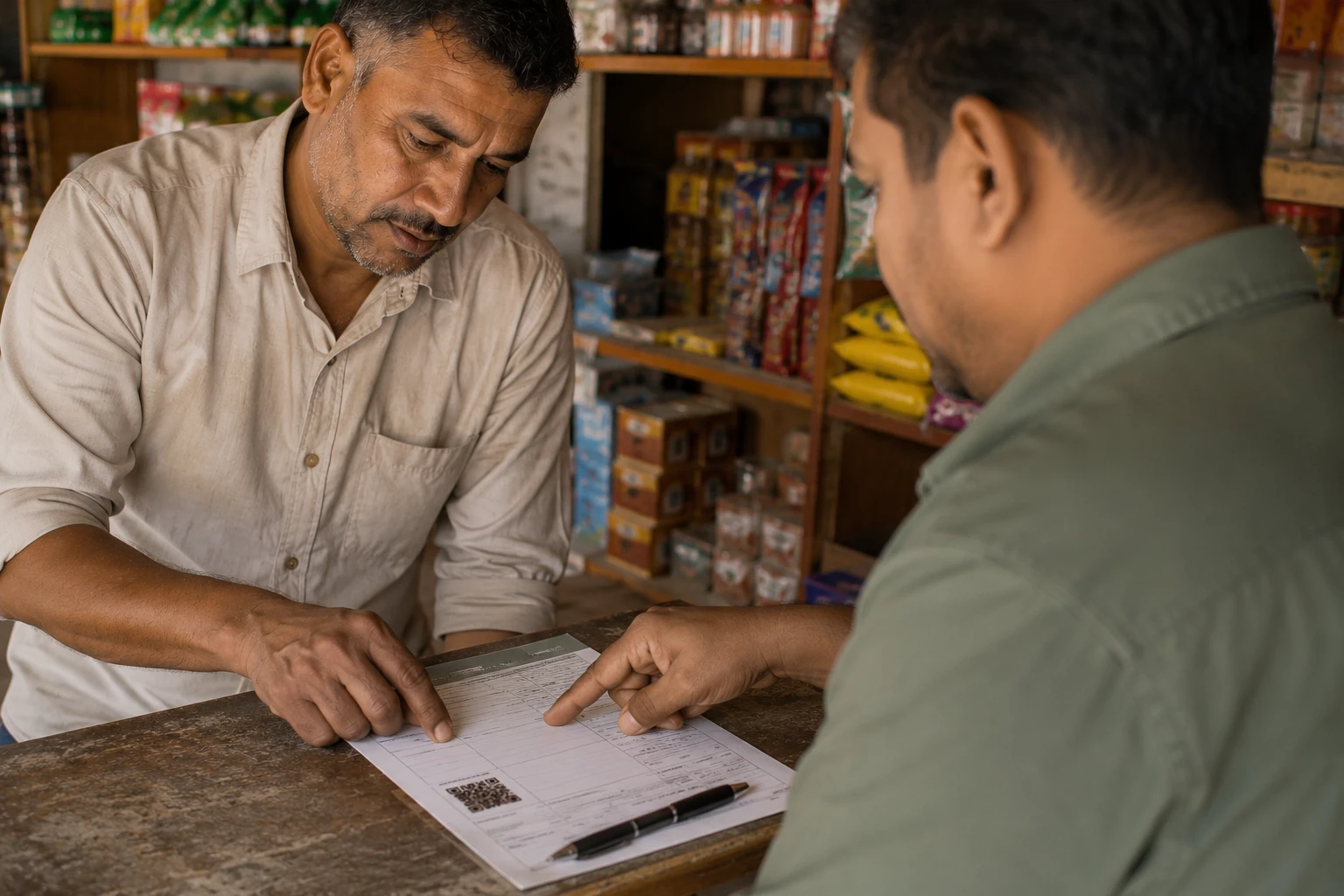
You register once, either yourself with a smartphone, or through a local print shop or cooperative office that does it for you on paper — this is called a Node-Business, and it exists specifically for people without a smartphone or reliable internet. Either way, you become a Member Operator on your own account, called a Field account: it belongs to you, not to anyone above you.
You answer a few honest questions about your business — what it actually is, what's working against it right now, what "doing fine" looks like in your own terms. You also set one number — a threshold you choose — below which you want to know something's wrong. This is called your CPL. No one sets it for you. You know your business; the number is yours.
Hûn Tiştê ku Hûn Jixwe Dikin Dişînin
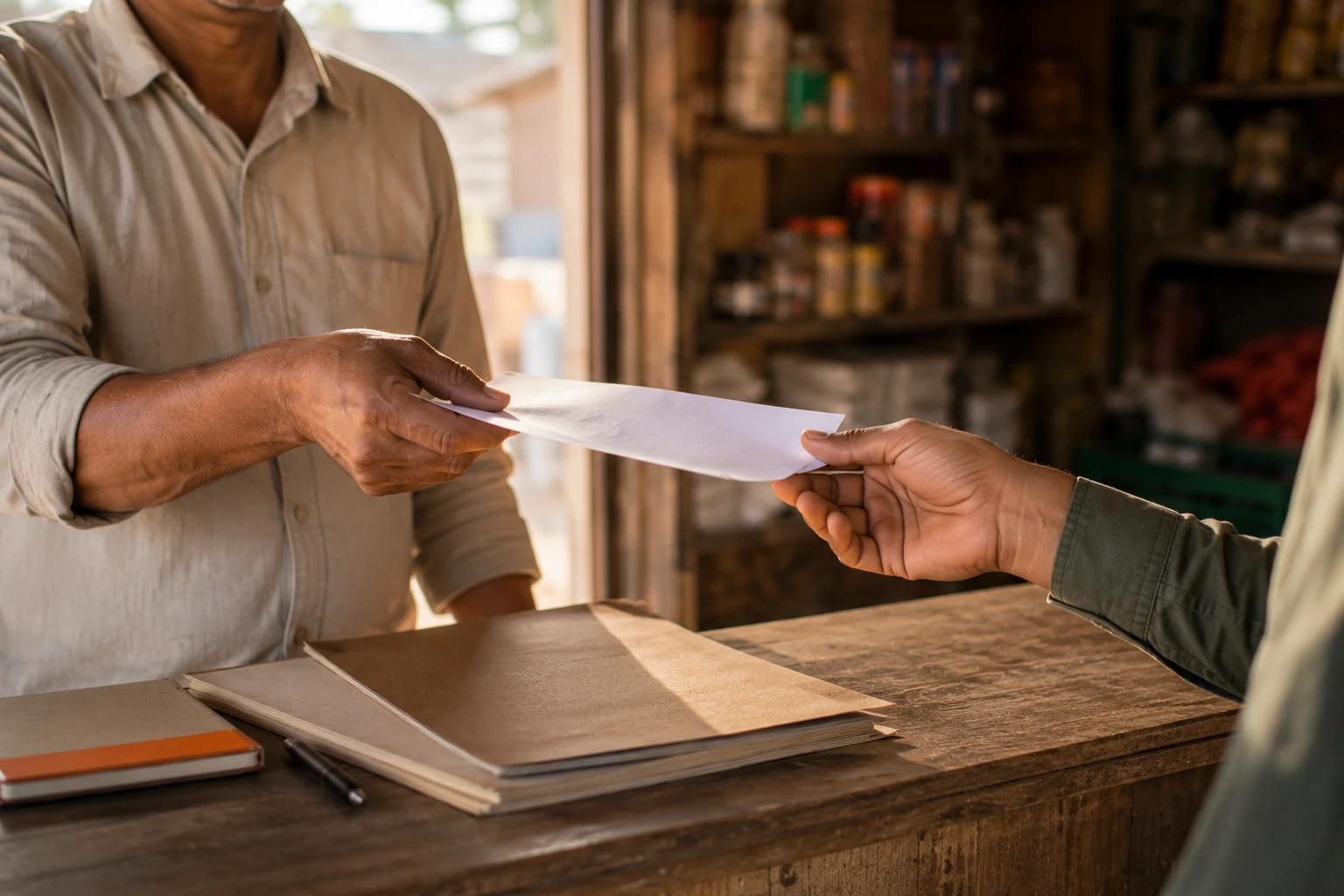
Once a week — or however often makes sense for your business — you record a few real numbers from your own work. On the app if you have one. On paper, submitted through your Node-Business, if you don't. No new work. Just writing down what you already know.
Hûn cara yekem şêwaza xwe dibînin
After a few weeks of readings, enough data exists to calculate your natural range — called XmR — the pattern your own numbers actually follow, worked out from your own history, not a guess. This is the moment the framework starts doing its real job: telling the difference between a normal bad week and a genuine warning sign.
From this point on, you have two things watching for you at once: the threshold you chose on Day 1, and the pattern your own business just revealed about itself. And because the readings are already there, you can also print a proof report right now — a record showing consistent, in-limit performance, ready the moment a bank or a buyer asks for it.
Tenê mînakî - xwendinên we yên heftane, xetên sînorê we, ji dîroka we hatine hesabkirin.
Li vir e ku ew bi rastî ji we re dibe alîkar ku hûn çêtir bibin
Here is what that looks like in practice. Take the Farmer from earlier. For months, weekly yield readings sit comfortably inside the natural range XmR calculated back in Month 1 — some weeks a little higher, some lower, all normal variation. Then, over three weeks, readings start drifting down. Not dramatically. Not yet below the CPL threshold. But the shape doesn't look like the usual up-and-down anymore — it looks like a trend.
That shape is the whole point. A single bad week means nothing on its own. A trend means something changed. Instead of finding out three months later when the season's income is visibly down, the Farmer sees it in week three and asks the right question early: what changed around here? Looking back, the irrigation schedule shifted after a pump was replaced two weeks before the drift started. Not a guess — a specific, dated, checkable cause, found because the timing lined up with the farmer's own readings, not with memory.
The irrigation timing gets adjusted back. The next few weeks' readings are the test: if the cause was right, yield recovers into the normal range again. It does. That recovery is confirmed by the exact same signal that caught the problem — not a hope that the fix worked, a checked one.
That loop — catch it early, find the real cause, fix it, confirm the fix worked — is what MetriqOne is actually for. The record this builds along the way never disappears either: nothing is deleted or overwritten, and if you pause for a season, everything is waiting exactly as you left it. A year from now, that record also happens to be exactly what a bank or a buyer wants to see. But that was never the main event — getting better at what you do, one caught problem at a time, is.
Tiştê ku Hûn Bi Rastî Bidest Dixin
Hûn pirsgirêkan digirin dema ku ew hîn piçûk in
Sînorê te û rêza te ya xwezayî herdu jî di heman demê de temaşe dikin - hefteyên hişyariyê li şûna surprîzekê, awayê ku Cotkar zêdebûna berhemê li jor girt.
Hûn sedema rastîn dibînin, ne texmînek
Sînyal nîşan dide ka tişt kengî guherîn. Hevberkirina wê bi tiştên ku bi rastî di wê demê de qewimîne re, "tiştek ne li rê" vediguherîne sedemek taybetî û çareserker.
Bankek tomarê serkeftinê dibîne, ne sozekê
Serlêdana deynê ku ji hêla dîrokeke çapkirî ya performansa domdar û di nav sînor de tê piştgirî kirin - ne daxuyaniyek dahatê ya ku bi xwe hatiye nivîsandin.
Kirrûbir delîlan dibîne, ne pêşniyarekê
Peymanek dabînkirinê an fermanek rawestayî ya ku bi delîlên ku hûn bi şert û mercên xwe bi pêbawerî radest dikin piştgirî dikin.
Tu xwediyê her perçeyek wê yî
Tu ofîsa sereke daneyên te naxwîne heya ku tu biryar nedî ku wan parve bikî. Hesabê te, sînyala te, delîla te ya çapkirî.
Smartphone tune? Pirsgirêk tune.
Node-Business — firoşgehek ku hûn jixwe dizanin
An existing print shop, cooperative office, or market desk — somewhere you already trust — registers you, prints your forms, submits them for you, and prints your proof report whenever you need it. Paper in, proof out. No app, no data plan, no new habit to learn.
Çawa Node-Business dixebitin →Te jixwe kar kiriye. Dest bi dîtina qalibê bike.
Nothing about your business needs to change. What changes is whether you can catch the moment something drifts, understand why, and fix it — before it costs you a season. Proof for a bank or a buyer comes along with that, but it was never the point. Getting better at what you already do is. That starts with a Day 1.
Dest pê bike