မာရီယာသည် လမ်းထောင့်တွင် ဥများရောင်းချသည်။
မာရီယာသည် လမ်းထောင့်တွင် ဥများရောင်းချသည်။
သူအဲဒီမှာ ဆယ့်တစ်နှစ်ကြာနေခဲ့ပြီ။ သူမသည် ဖောက်သည်တွေကို အမည်၊ အလေ့အကျင့်၊ ငွေကြေးကျပ်သည့်အချိန်နှင့် မကျပ်သည့်အချိန်တွင် သူတို့မှာယူသည့်ပမာဏအလိုက် သိသည်။ ဘယ်ရောင်းချသူက အချိန်မှန်ရောက်ပြီး ဘယ်သူက ပစ္စည်းနည်းပို့သည်ကို သူမသိသည်။ အင်္ဂါနေ့သည် သူမ၏အကောင်းဆုံးန
သူမသည် ဤအရာအားလုံးကို သိသည်။ သူမသည် ၎င်းတို့အနက်မှ မည်သည့်အရာကိုမျှ သက်သေမပြနိုင်ပါ။
သူမသည် ဒေသခံ Cooperative မှတဆင့် ချေးငွေငယ်တစ်ခုအတွက် လျှောက်ထားသောအခါ အရာရှိသည် သူမ၏ ရောင်းအားမှတ်တမ်းများကို တောင်းခဲ့သည်။ သူမသည် သူ့အား ကိန်းဂဏန်းများပါသော မှတ်စုစာအုပ်တစ်အုပ်ကို ပြသခဲ့သည်။ ထိုကိန်းဂဏန်းများသည် တစ်ခါတစ်ရံ နေ့စဉ်၊ တစ်ခါတစ်ရံ အပတ်စဉ်ဖြစ်ပြီး၊ ရေးရန်အလုပ်များလွန်းသည့် အချိန်အပိုင်းအခြားများတွင် ပျောက်နေတတ်သည်။ သူသည် ယင်းနှင့်ပတ်သက်၍ ယဉ်ကျေးစွာ ပြောဆိုခဲ့
အကောင့်စနစ်တစ်ခု မဟုတ်ပါ။ လုပ်ငန်းအစီအစဉ်တစ်ခု မဟုတ်ပါ။ လက်တော့ပ်နှင့် ယုံကြည်စိတ်ချရသော ချိတ်ဆက်မှုလိုအပ်သည့် စာရင်းဇယားတစ်ခု မဟုတ်ပါ။
ဖတ်ရှုခြင်း
One line per checkpoint. Nine at minimum. Usually eighteen. Some operations record a handful across a week. Others record dozens before noon. The instrument does not set the pace — the work does.
A paper form is the most primitive way to send a signal. That is the point. It is the floor, not the ceiling — the tier that works when nothing else does. A phone, a scan, a direct entry all carry the same reading. Paper is simply the one that never fails to arrive.
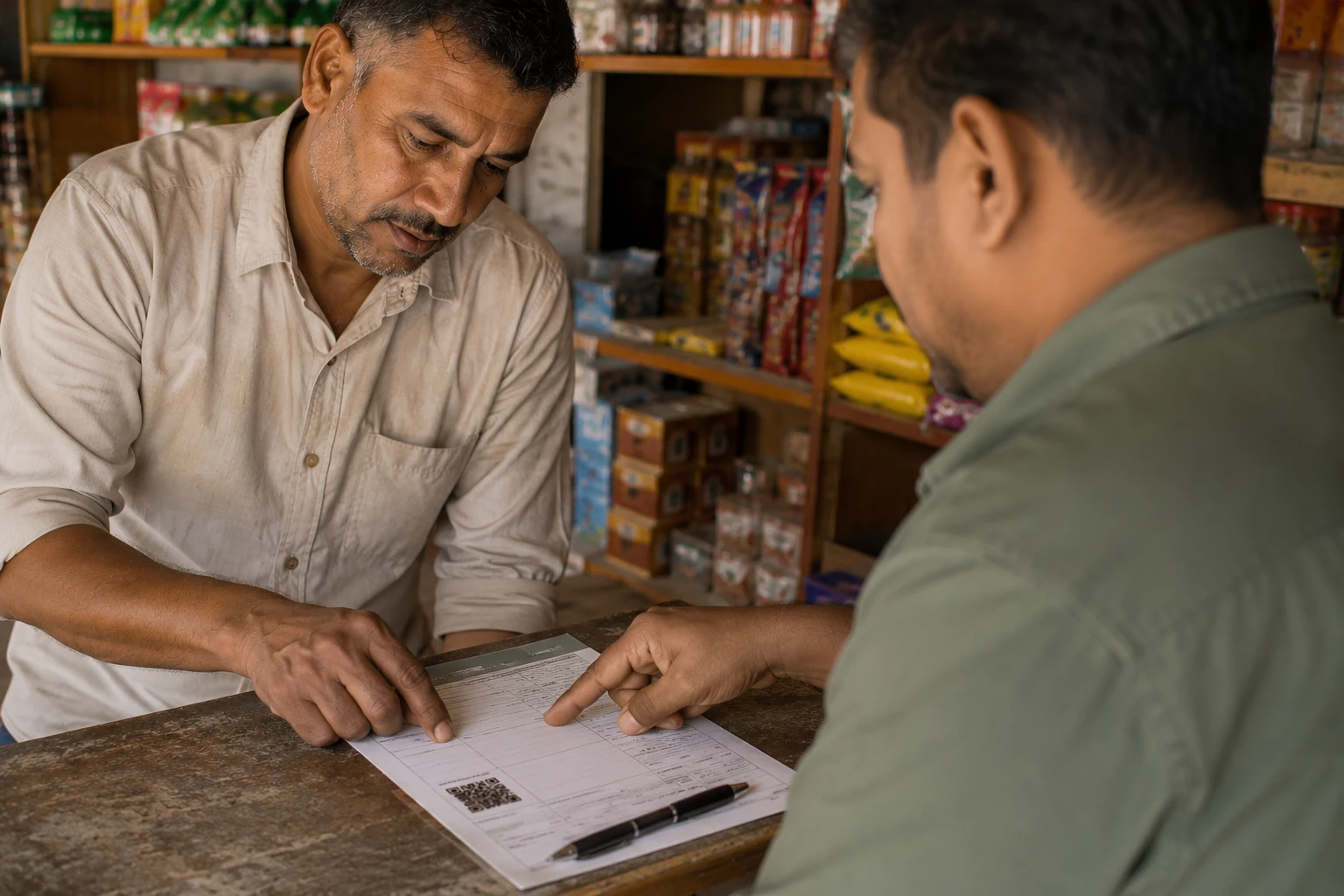
ငါးမိနစ်။ သူမသည် မိမိ၏ပစ္စည်းစာရင်းကို ရေတွက်နေပြီးသား ထိုငါးမိနစ်အတိုင်းပင်။
ခြားနားချက်က သူမဘာရေးသလဲဆိုတာမဟုတ်ဘူး။ ခြားနားချက်က သူမက တစ်သမတ်တည်းရေးတာပဲ — တူညီတဲ့ကွက်တွေ၊ တူညီတဲ့အချိန်၊ တူညီတဲ့ပုံစံ — ဒါမှ ရက်သုံးဆယ်အကြာမှာ မြင်ရခြင်းမရှိခဲ့တဲ့အရာတစ်ခု မြင်သာလာတယ်။
စုစုပေါင်းမျှသာမဟုတ်။ ပုံစံများ။
Tuesday is 40% above her weekly average. She already knew that. Now she can show it. The third week of the month dips reliably — not because her product is worse, but because her customers' cash flow follows the same cycle as hers. One supplier delivers short on average 1.4 times per month, always on Fridays. She knew that too. Now it has a number attached to it, and a date, and a record that goes back six months.
The cooperative officer sees the same application six months later. The notebook has been replaced by a simple printed form — the same fields, filled in consistently, submitted at a steady interval.
He can see the Tuesday pattern. He can see the monthly dip. He can see that the unreliable supplier accounts for roughly 8% of her stock shortfalls. He can see that her sales have grown 12% over the six months she has been collecting.
This is not a business plan. It is evidence. Evidence of a real operation, run by a person who understands her own business well enough to measure it.
The loan proceeds.
A development agency working with 200 micro-vendors in a market district gets a different kind of picture when those vendors are collecting consistently.
Not self-reported surveys. Not estimates. Signal data — from the point of transaction, recorded by the person closest to the reality, at the time it happened.
Which days generate the most volume. Which suppliers are reliable across the network. Which weather patterns affect sales. Where the cash flow gaps cluster. Where assistance is needed, before a vendor reaches a crisis point.
The agency doesn't need to design a study. The signal is already there, collected every morning by the people who know their business best.
It works without internet. It works on paper. It works in 105 languages. A vendor with a printed form and a pen is collecting the same quality of signal as one with a smartphone and a stable connection.
The form is not complicated because the operation is not complicated. One product, one market, one set of variables that matter. The instrument fits the scale of the work.
After six months, Maria has something she has never had before: a record of her own competence. Not as she describes it. As she demonstrated it, reading by reading, in her own handwriting, submitted as she went.
Nobody can tell her the business isn't viable. The signal says otherwise.
Maria didn't need a consultant. She didn't need a course in financial literacy or a workshop on business planning. She needed an instrument that met her where she was — at the corner, with her eggs, before the morning rush.
The cooperative gets a borrower they can assess with confidence. The development agency gets ground-level signal data without designing an expensive study. Maria gets access to capital she has always deserved.
The signal was always there. Now it travels.
MetriqOne is a performance measurement framework built for organisations operating in fragile, resource-constrained environments. It works on paper, offline, and in 105 languages. The signal is the instrument.