One door. Twenty people.
Starting a business alone is expensive.
Not only in money. In time. In paperwork. In permits. In the months before you earn anything while the fees keep coming.
Fire permit. Sanitary permit. Community clearance. Municipal permit. Tax registration. Each one costs money. Each one takes time. Each one falls on one person.
Now divide by twenty.

A cooperative is one legal entity. One registration. One municipal permit. One set of permits. One bank account. One legal identity that can sign a contract, receive a grant, and access an affordable credit line.
The door that was closed to each of them alone is open to all of them together.
The lender at the door
The lender comes to the door early. He has one offer: borrow today, repay far more than you borrowed, or go without.
He survives on one condition — that you have no alternative.
Twenty members. A shared credit line, routed formally through the cooperative.
The lender moves to the next street. Not because of a law, a programme, or a speech. Because twenty people no longer need him.
Every problem, the same answer
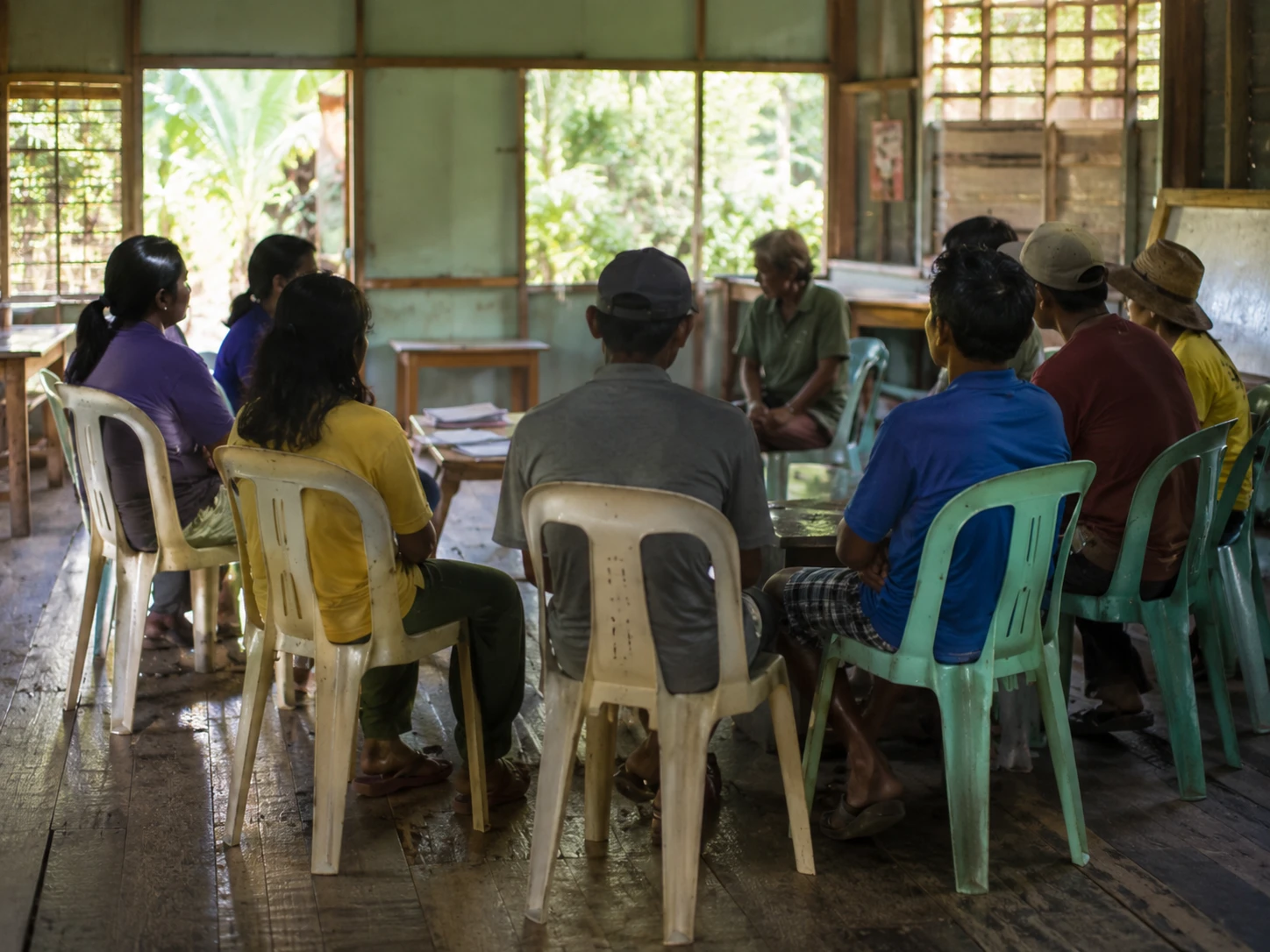
The cooperative also answers the buyer who arrives when the fruit is turning and you have no choice. Twenty producers together have volume. Volume means a truck. A truck means a market that is not this one — and a price that was not set at your gate.
It answers the pricing trap. Ten makers buying material together pay wholesale. One coordinator finds orders none of them could find alone. The floor price is set by arithmetic, not by desperation.
It answers the cold storage gap. One family cannot afford it. Twenty can. Shelf life moves from days to weeks, and the buyer who knew how long the catch had left no longer has that information.
It answers the compliance cost. One entity, one registration, one set of permits, divided by twenty. The baker who could not afford to formalise alone formalises as a member.
The lender, the deadline buyer, the cold storage gap, the compliance barrier, the pricing trap — every pressing problem has the same answer. Twenty people. One entity. One door.
The measurement
A cooperative that does not measure is a wish. A wish that the price improved. A wish that the members are better off. A wish that the lender has gone and is not coming back.
The measurement turns the wish into evidence — one observable result, anchored outside the cooperative, recorded where it happens rather than assembled afterwards to fit a deadline.
If yes, the cooperative is working. Keep going.
If no, find out why — before the wish becomes another quietly failed experiment nobody measured until it was too late.
Twenty people no longer need the lender. But only if someone is keeping the evidence.
क्या इससे कोई फर्क पड़ता है? — इसे मापें!!
MetriqOne is a performance measurement framework built for organisations operating in fragile, resource-constrained environments. It works on paper, offline, and in over a hundred languages. The signal is the instrument.
MetriqOne · शोर रहित साक्ष्य · metriq.one