Kanggo Usaha Cilik
Bisnis Sampeyan Nduweni Pola. Umume Pamilik Ora Tau Bisa Ndeleng.
A good week and a bad week feel the same in the moment — you just keep working. Without a record, you can't tell the difference between normal ups and downs and something actually going wrong, until it's already a problem. MetriqOne's whole purpose is showing you that difference early enough to do something about it.
That is the main thing it does: read your own numbers back to you in a way that catches drift while it's still small, so you can find the real cause and fix it — before a bad month becomes a bad year. A printed, dated record of how your business performs comes along with that, almost as a side effect — and it happens to be exactly what a bank or a buyer wants to see. Here is what actually happens, week by week.

Telung Bisnis. Titik Miwiti sing Padha.
Pakaryan sing beda, kesenjangan sing padha: ora ana cara kanggo mbedakake variasi normal saka tandha peringatan sing nyata, lan ora ana tulisan sing bisa dipercaya dening bank utawa panuku. Kita bakal ngetutake kabeh telu nganti tekan apa sing sejatine kedadeyan.

Pedagang
Tuku lan adol barang ing pasar utawa ing tapel wates. Dagang saben minggu. Ora ana sing ditulis ing kertas.
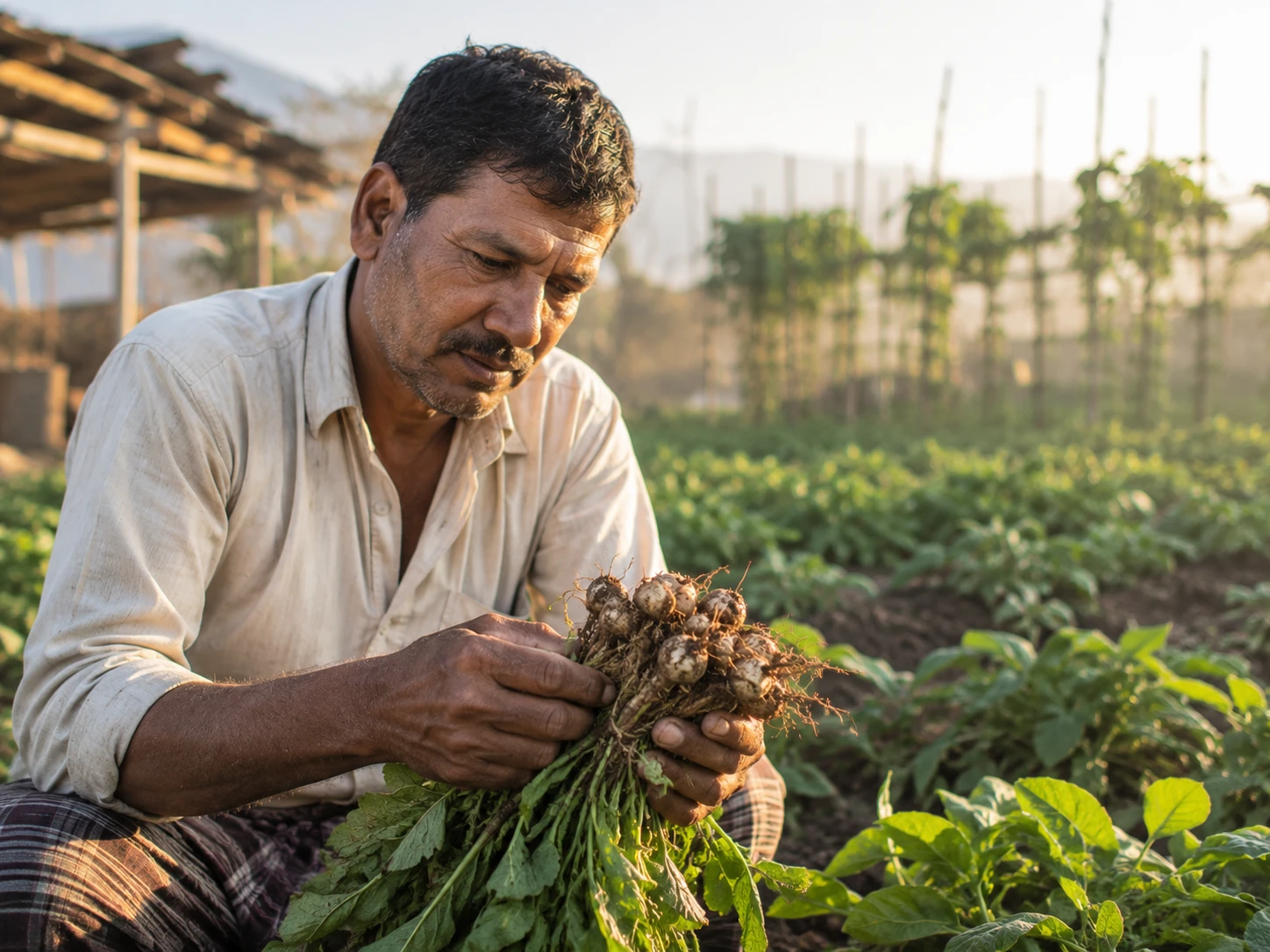
Petani
Nandur lan ngedol prodhuksi kanthi siklus tetep. Panenan beda-beda. Ora ana cathetan babagan apa sing "normal" katon kaya apa.

Bengkel
Nggawe utawa ndandani barang miturut pesenan. Ngirim kanthi dipercaya. Durung nate mbuktekake marang sapa wae — nganti saiki.
Apa sing Sejatine Kedadeyan — Minggu demi Minggu
Sampeyan Ndhaptar — lan Sampeyan Nemtokake Apa Tegese "Apik"
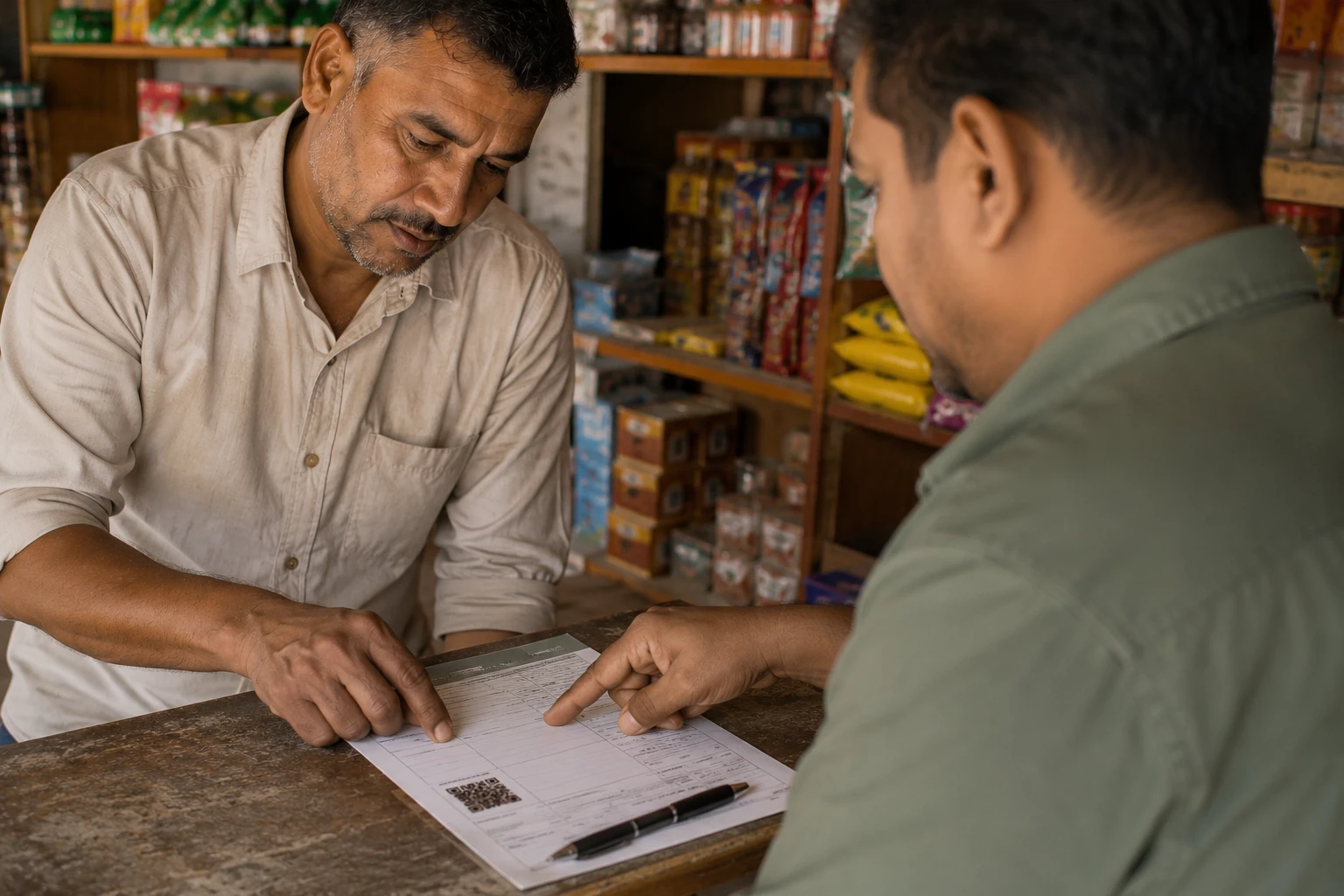
You register once, either yourself with a smartphone, or through a local print shop or cooperative office that does it for you on paper — this is called a Node-Business, and it exists specifically for people without a smartphone or reliable internet. Either way, you become a Member Operator on your own account, called a Field account: it belongs to you, not to anyone above you.
You answer a few honest questions about your business — what it actually is, what's working against it right now, what "doing fine" looks like in your own terms. You also set one number — a threshold you choose — below which you want to know something's wrong. This is called your CPL. No one sets it for you. You know your business; the number is yours.
Kowé Ngaturaké Apa sing Wis Kowé Tindakaké
Once a week — or however often makes sense for your business — you record a few real numbers from your own work. On the app if you have one. On paper, submitted through your Node-Business, if you don't. No new work. Just writing down what you already know.
Sampeyan Ndeleng Pola Dhewe kanggo Pisanan
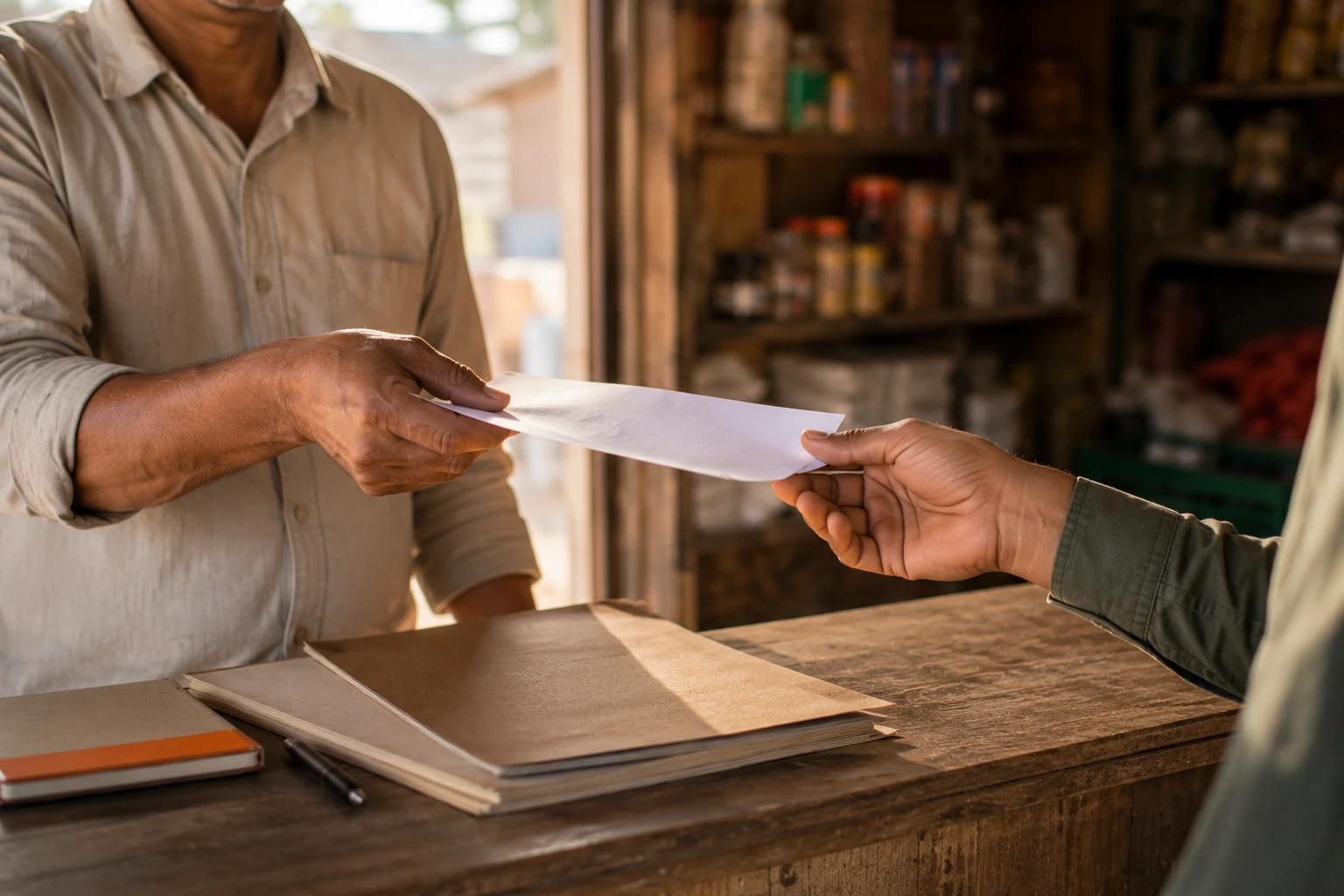
After a few weeks of readings, enough data exists to calculate your natural range — called XmR — the pattern your own numbers actually follow, worked out from your own history, not a guess. This is the moment the framework starts doing its real job: telling the difference between a normal bad week and a genuine warning sign.
From this point on, you have two things watching for you at once: the threshold you chose on Day 1, and the pattern your own business just revealed about itself. And because the readings are already there, you can also print a proof report right now — a record showing consistent, in-limit performance, ready the moment a bank or a buyer asks for it.
Mung ilustrasi — wacan minggonmu dhewe, garis watesanmu dhewe, diitung saka riwayatmu dhewe.
Iki Panggonane Sejatine Mbantu Sampeyan Dadi Luwih Apik
Here is what that looks like in practice. Take the Farmer from earlier. For months, weekly yield readings sit comfortably inside the natural range XmR calculated back in Month 1 — some weeks a little higher, some lower, all normal variation. Then, over three weeks, readings start drifting down. Not dramatically. Not yet below the CPL threshold. But the shape doesn't look like the usual up-and-down anymore — it looks like a trend.
That shape is the whole point. A single bad week means nothing on its own. A trend means something changed. Instead of finding out three months later when the season's income is visibly down, the Farmer sees it in week three and asks the right question early: what changed around here? Looking back, the irrigation schedule shifted after a pump was replaced two weeks before the drift started. Not a guess — a specific, dated, checkable cause, found because the timing lined up with the farmer's own readings, not with memory.
The irrigation timing gets adjusted back. The next few weeks' readings are the test: if the cause was right, yield recovers into the normal range again. It does. That recovery is confirmed by the exact same signal that caught the problem — not a hope that the fix worked, a checked one.
That loop — catch it early, find the real cause, fix it, confirm the fix worked — is what MetriqOne is actually for. The record this builds along the way never disappears either: nothing is deleted or overwritten, and if you pause for a season, everything is waiting exactly as you left it. A year from now, that record also happens to be exactly what a bank or a buyer wants to see. But that was never the main event — getting better at what you do, one caught problem at a time, is.
Apa sing Sampeyan Gayuh Sejatine
Kowé nemokaké masalah nalika isih cilik
Ambang watesmu dhewe lan jangkauan alamimu dhewe, loro-lorone ngawasi bebarengan — pirang-pirang minggu peringatan tinimbang kejutan, cara Petani nyekel penyimpangan panen ing ndhuwur.
Kowé nemokaké sabab sing sejati, dudu mung tebakan
Ana sinyal sing nuduhake kapan ana owah-owahan. Yen dibandingake karo apa sing kedadeyan ing wektu kasebut, "ana sing ora beres" bakal dadi panyebab tartamtu sing bisa didandani.
Bank ndeleng rekam jejak, dudu janji
Aplikasi silihan sing didhukung karo riwayat kinerja sing konsisten lan konsisten — dudu laporan laba rugi sing ditulis dhewe.
Pembeli ndeleng bukti, dudu promosi
Kontrak pasokan utawa pesenan tetep sing didhukung dening bukti yen sampeyan ngirim kanthi andal, miturut syarat sampeyan dhewe.
Kowé nduwèni saben bagéyané
Ora ana kantor pusat sing maca data sampeyan kajaba sampeyan milih kanggo nuduhake. Akun sampeyan, sinyal sampeyan, bukti cetak sampeyan.
Ora ana smartphone? Ora ana masalah.
Node-Business — toko sing wis kokngerteni
An existing print shop, cooperative office, or market desk — somewhere you already trust — registers you, prints your forms, submits them for you, and prints your proof report whenever you need it. Paper in, proof out. No app, no data plan, no new habit to learn.
Cara Kerja Node-Business →Kowé wis nindakké pegawéyané. Miwiti ndelok polané.
Nothing about your business needs to change. What changes is whether you can catch the moment something drifts, understand why, and fix it — before it costs you a season. Proof for a bank or a buyer comes along with that, but it was never the point. Getting better at what you already do is. That starts with a Day 1.
Miwiti